A PetSmart Campaign update - our road to change
News
After publicly launching our 2021 campaign urging PetSmart to stop the sale of wild animals as pets, and supporters in Canada and the United States speaking out, we have taken a critical step in the campaign and are in conversation with the company.
A recap of the campaign so far
We have been working tirelessly to encourage PetSmart to engage with us and to respond to our ask to end the sale of wild animals in their Canadian stores.
Below are some of the key moments in the campaign so far:
- September 2018: Held our first workshop to train enforcement officers and shelters on the animal welfare and health and safety risks of exotic pets. We invited PetSmart to participate but they didn't come.
- January 2019: Introduced our organization and work to the new president of PetSmart Canada.
- November 2019: Shared our report on the exotic pet trade in Canada.
- June 2020: Shared our ground-breaking report on the ball python trade with PetSmart. The report shows the destructiveness of this global trade.
- January 2021: Sent a letter to PetSmart to inform them of our upcoming public campaign.
- February 2021: Sent letter to show growing support for campaign, including from PetSmart customers.
- May 2021: Sent an open letter to PetSmart signed by vets, scientists and other organizations urging PetSmart to stop selling wild animals.
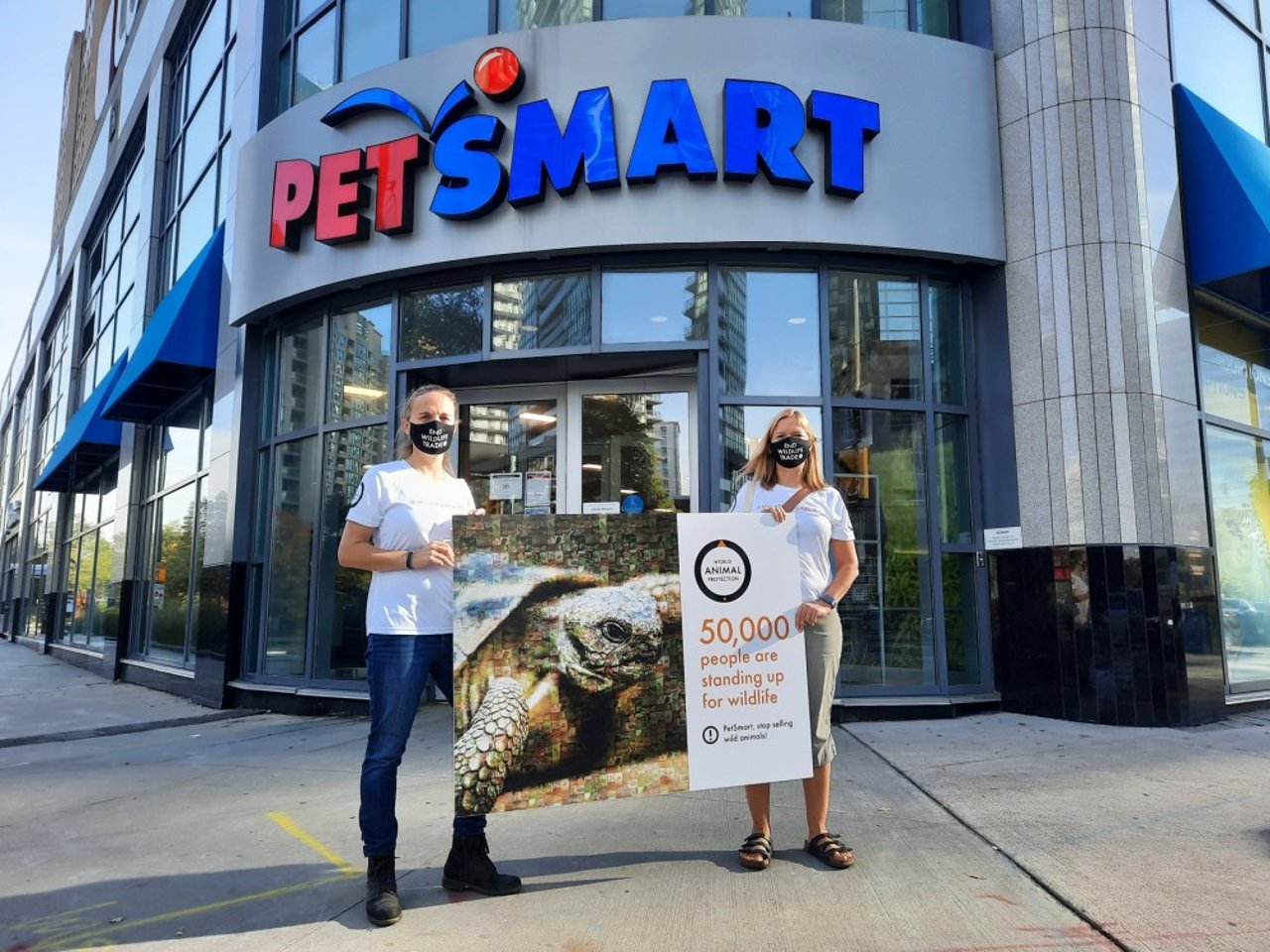
- October 2021: Handed over a petition with 50,000 signatures urging PetSmart to stand up for wildlife.
- July 2022: Had our first meeting with PetSmart Headquarters in Arizona.
- March 2023: World Animal Protection is named publicly by PetSmart in their Corporate Social Responsibility (CSR) report as a collaborator to advancing animal welfare, to “continuously help us evaluate and evolve our policies in these areas”.
- 2024: We continue conversations with PetSmart directly, sharing research, polling and best practices.
- March 2025: PetSmart publishes an Animal Welfare Policy – a tool that you helped push for. In the policy, PetSmart notes “Our approach is informed by our in-house veterinary experts, industry leaders, and partnerships with respected animal welfare organizations, like World Animal Protection. These collaborations, combined with the latest scientific research, help us continually assess what makes a suitable pet (...)”.
- April 2025: PetSmart publishes their 2024 CSR, again publicly naming World Animal Protection, and announcing the phase-out of Cuban False Chameleons, Fancy Bearded Dragons and several snake species.
- April 2026: PetSmart publishes their 2025 CSR, with a milestone announcement that they no longer sell turtles or tortoises. In the same report, they also announced the phase-out of Bahaman anoles and red claw crabs.
Next steps for the campaign
We are very pleased that we can continue to bring our expertise and the voices of our supporters directly to the table with PetSmart.
We want to amplify the voices of our supporters and call on PetSmart to make choices in line with evolving scientific evidence and public attitudes on the acceptability and risks of keeping wild animals as pets. Polling results we commissioned in 2020 found that:
- 92% of Canadian customers are concerned that selling reptiles and amphibians as pets can cause harm to the animals.
- 90% do not believe that reptiles and amphibians should be kept as pets because they suffer in captivity.
- 91% want PetSmart to be transparent with their customers about where their animals come from.
- 90% think that pet stores should improve their animal welfare standards and be transparent with their customers about how difficult it is to keep wild animals as pets.
PetSmart has acknowledged the work we’re doing in their animal welfare policy:
Our approach is informed by our in-house veterinary experts, industry leaders, and partnerships with respected animal welfare organizations, like World Animal Protection. These collaborations, combined with the latest scientific research, help us continually assess what makes a suitable pet (...)
We go into the discussions constructively, collaboratively and optimistically, but also critically and with high expectations that once companies know better, they will do better for animals.
We will not stop our work until we get a commitment from PetSmart that they will phase out the sale of reptiles and amphibians in their stores.
We know we can count on you in the future if we need to clearly demonstrate to PetSmart that their customers want them to stop participating in the wildlife trade by selling wild animals as pets.
Further reading:
Wild animals as pets
No wild animal can have its needs entirely met when kept as an exotic pet.
7 reasons why you shouldn’t keep wildlife as exotic pets
Blog
Wild animals belong in the wild, not in your home as exotic pets, and here’s why
Banner photo: Gina Smith / Shutterstock