Bred to Entertain – A new assessment of Thailand’s elephant tourism industry
Report
New report finds that two out of three captive elephants used in Thailand’s tourism industry live in poor conditions.
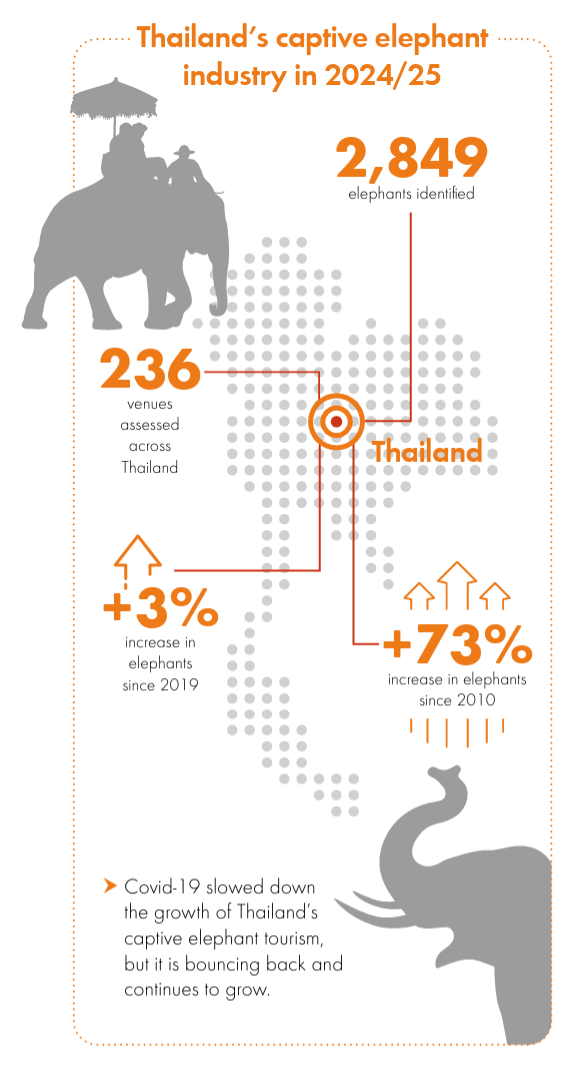
World Animal Protection’s report ‘Bred to entertain’ examines the living conditions of 2,849 elephants across 236 tourism venues, a continuation of 15 years of research. Our assessment found that 69% of elephants in Thailand’s tourism industry are still living in poor or unacceptable conditions.
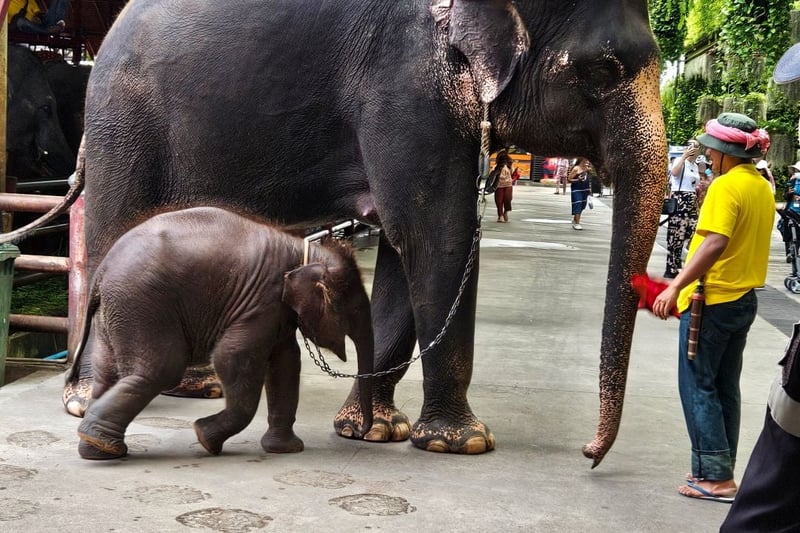
While some progress had been made, particularly a decline in elephant rides and circus-style shows, this has been replaced by a troubling increase in the total number of captive elephants and a shift toward tourist activities marketed as “ethical”, like elephant bathing and caretaking activities. These activities still rely on tight control over elephants and often involve restraints, cruel training methods and little opportunity to express their natural behaviours.
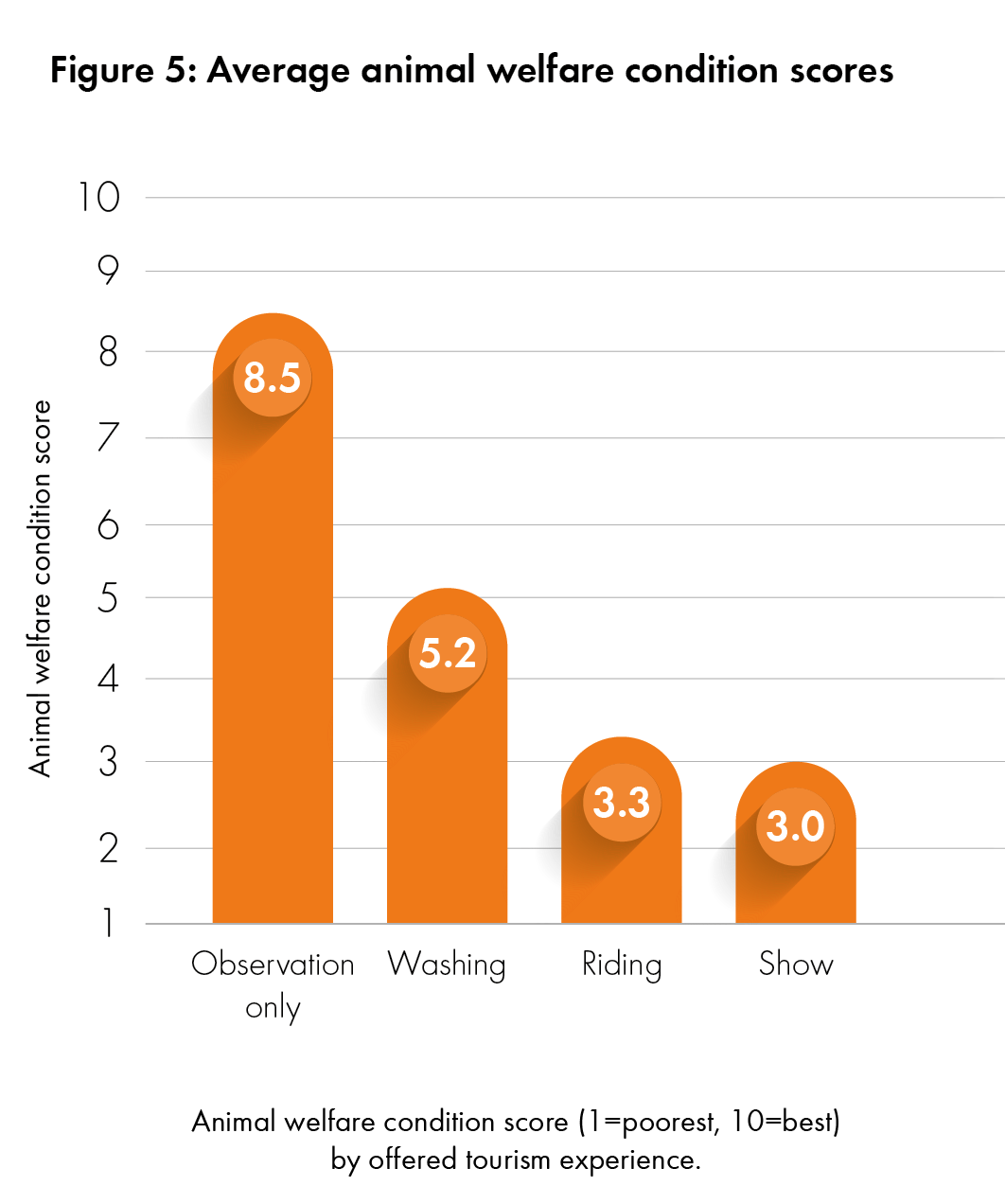
Venues offering elephant rides or shows received the lowest welfare scores, while observation-only venues scored the highest. And despite their marketing, elephant bathing and caretaking experiences are not as ethical as you might think – venues offering these activities score poorly for elephant welfare.
While this research was focused on Thailand, elephant tourism is fuelled by visitors from all around the world, including Canada.
As of 2022*
- 34% of Canadians believe it’s “acceptable” to ride an elephant
- 39% believe it’s “acceptable” to wash or bath elephants
*Survey conducted in 2022 by Savanta ComRes with a representative sample of 1,529 Canadians, ± 2.51%, 19 times out of 20.
Recognizing the welfare concerns facing captive elephants, Bill S-15 was introduced into the Canadian Senate in 2023 to ban the commercial trade, breeding and use of elephants for rides and entertainment. Progress on the bill came to a halt when Parliament was prorogued in January 2025.
Some Canadian zoos, including the Toronto Zoo and Calgary Zoo, have permanently closed their elephant exhibits and relocated their elephants to sanctuaries or other facilities. Others, such as Granby Zoo and the Edmonton Valley Zoo, have committed to phase out elephant captivity. However, African Lion Safari, which used elephants for rides and shows until a staff member was injured in 2019, continues to breed elephants for entertainment.
Reintroducing this bill would be a significant step forward, not only banning elephant captivity for entertainment in Canada but also sending a strong message globally that this practice is unacceptable. We remain hopeful that similar legislation will be introduced again.
Key points:
- The report assesses 2,849 elephants across 236 tourism venues in Thailand.
- 69% of elephants live in poor conditions.
- 26% live in “improved” conditions.
- Only 5% live under “best possible” captive conditions.
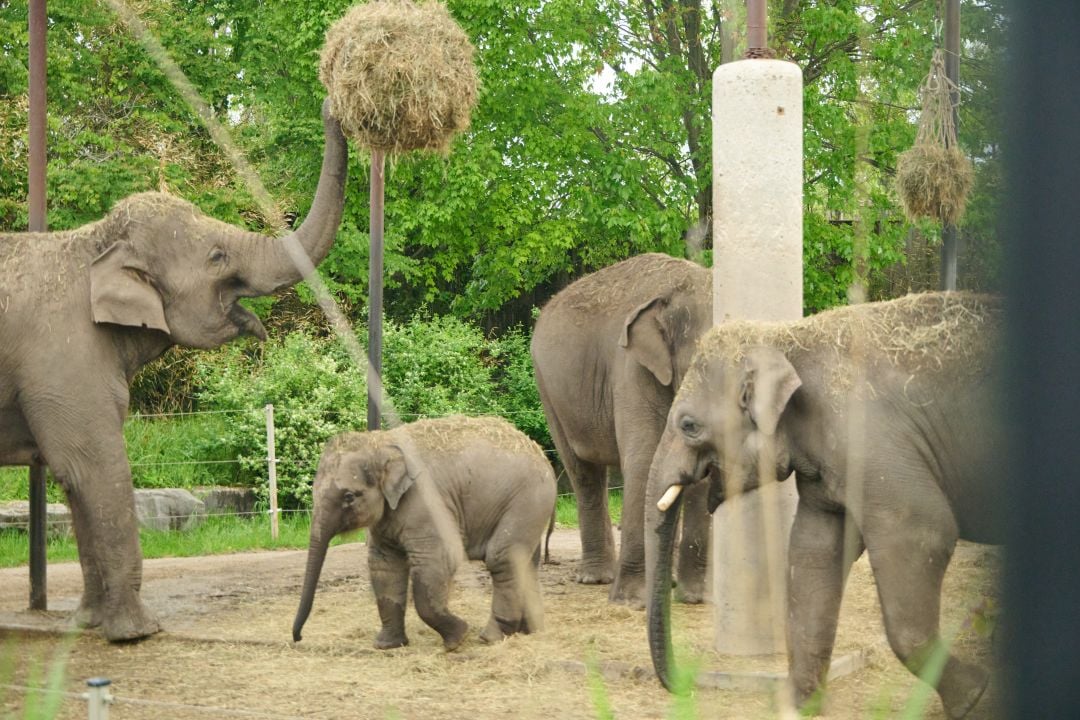
- Just 7% of elephants live in observation-only venues, where they are viewed from a distance without physical contact – the option considered best for elephants.
- The total number of elephants in the tourism industry has increased by 3% since our last full assessment in 2019.
- Elephant rides and shows have declined, but 54% of elephants are now used in washing or caretaking activities marketed as “ethical” or “hands-on” experiences.
The solution
Travel companies can play a powerful role in ending elephant suffering by refusing to promote or sell tickets to hands-on wildlife encounters. Through our campaigns, more than 200 travel companies globally have already committed to wildlife-friendly policies and no longer sell exploitative elephant or other wild animal experiences. Yet many other companies still sell elephant rides or promote washing and hand-feeding interactions, using misleading marketing that allows harmful practices to continue.
Travel companies can protect elephants by adopting and enforcing strong wildlife policies that ban all close-contact elephant tourism, promote observation-only experiences, train staff and suppliers and rigorously audit supply chains.
As a key bridge between travellers and elephant venues, the travel industry’s influence goes beyond the experiences it sells. By providing clear, consistent information on what responsible elephant tourism looks like, companies can empower tourists to make better choices. Travellers, in turn, can drive change by choosing companies that align with their values and have transparent animal welfare policies, helping shift tourism toward more ethical and responsible practices.
When tourists participate in activities that bring them in direct contact with elephants, they unwittingly sustain the cruel practices and the stress these animals endure in captivity,
says Dr. Jan Schmidt-Burbach, Director of Wildlife Research and Veterinary Expertise at World Animal Protection.
World Animal Protection works with travel companies and local partners to support a shift toward observation-only experiences that prioritize elephant welfare while supporting livelihoods. We also provide elephant-friendly guidelines to support venues in transitioning to best-practice animal management and help guide tourists to make ethical choices.