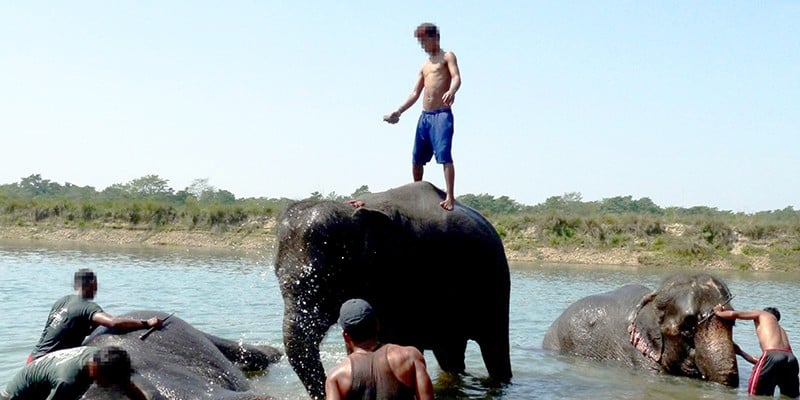
Elephant bathing is not as ethical as you think
Blog
Elephant bathing may seem ethical, but interactions are stressful for elephants and dangerous for people. True welfare comes from space, freedom and observation, not human entertainment.
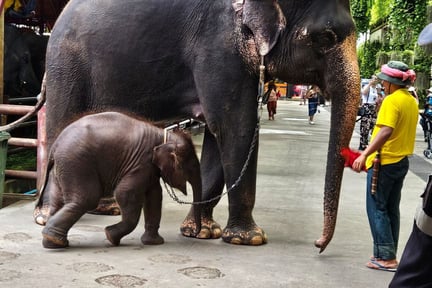
Elephant bathing is a popular tourist activity in Asia, often promoted as a “humane” alternative to elephant rides or shows. Tourists love the idea of interacting with elephants, scrubbing and splashing with them in rivers or pools, believing they are supporting ethical elephant tourism.
But behind the scenes, this activity often comes at a high cost to the elephants’ welfare and even people's lives.
Why elephant bathing is harmful
Even elephants used in “ethical” bathing experiences are either taken from the wild or bred in captivity. To make them safe for human interaction, many elephants undergo a harsh training method called the ‘crush’, which can involve:
- Physical punishment or restraints
- Isolation from other elephants
- Intense control and fear-based methods
These methods are often hidden from tourists, creating the illusion that the elephants are happy and relaxed.
Many travelers assume that elephant bathing is better than rides or shows. While bathing may seem gentle, it does not address the underlying welfare issues:
- Elephants often live in inadequate conditions, with limited space and lack of social interaction.
- Their natural behaviours are restricted to fit human schedules.
- Even positive human contact can be stressful if elephants are forced into it daily.
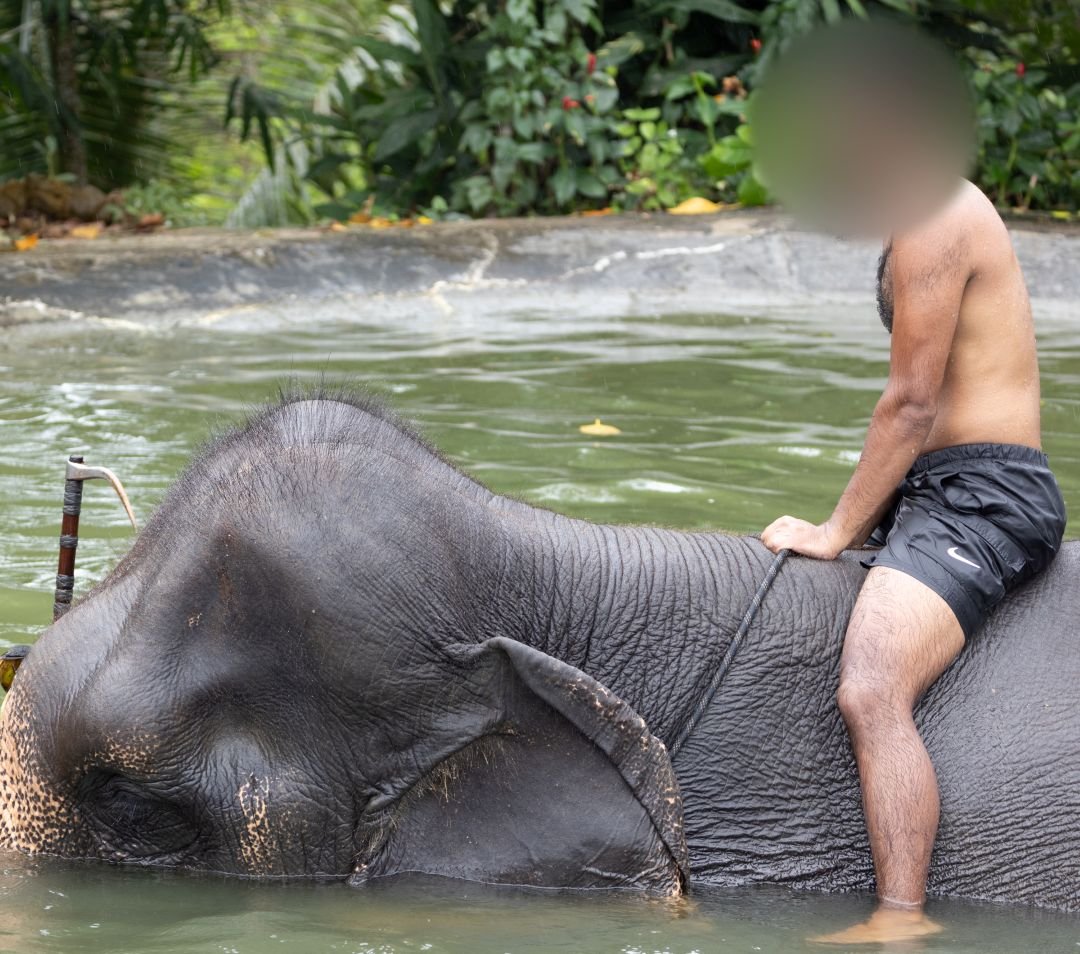
Aside from the welfare concerns for the elephants, bathing can be a risky activity for the humans involved too. As recently as 2025, a 22-year-old tourist was tragically killed during an elephant bathing experience in Thailand – the elephant likely stressed by the frequent interactions with tourists.
Hiding suffering “ethically”
While elephant rides and shows are on the decline, washing and care-taking experiences are on the rise. According to our 'Bred to Entertain’ report, 54% of all captive elephants in Thailand were kept at venues offering washing or care activities. These venues frequently promote themselves as sanctuaries, rescue centres or refuges, misleading tourists into believing they are participating in something ethical and beneficial for elephants.
Elephants do not need visitors to wash them. If given a choice, captive elephants will avoid close contact with people they are not familiar with.
At washing venues, they do not have that choice, and elephants are coerced through a mix of associating the presence of visitors with food, punishment if an elephant doesn’t comply and the regularity of those interactions.
Observing elephants: A better way
There is encouraging news: observation-only experiences, in which visitors observe the elephants without directly interacting with them, are on the rise. In 2010, only 4.6% of captive elephants in Thailand (75 animals) were kept at venues offering observational experiences. By 2024/2025, this had increased to 7.2% (207 elephants) - almost three times as many.
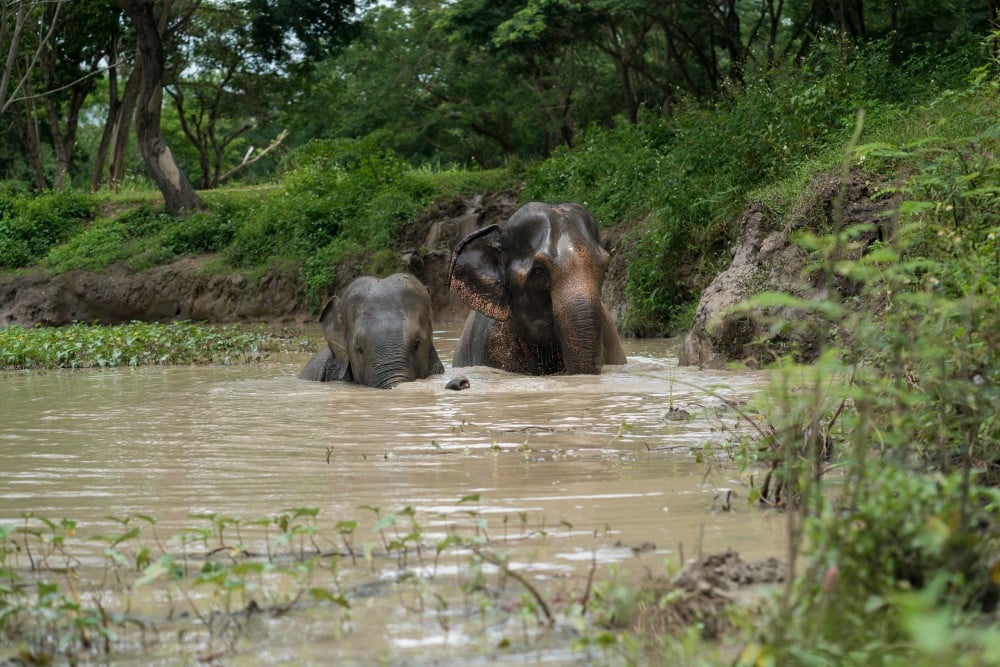
In high-quality observation venues, elephants are encouraged to explore their environment autonomously, forage naturally, socialize with other elephants and interact only with skilled handlers who use humane methods.
Making elephant-friendly tourism happen
World Animal Protection has worked in Thailand for the past 15 years to encourage venues to transition to high-welfare, observation-focused environments. So far, 13 venues have successfully made the change, becoming leading examples for others.
Through our campaigns, more than 200 travel companies globally have committed to wildlife-friendly policies, no longer selling exploitative elephant or other wild animal experiences.
Yet many venues and online booking platforms continue to sell elephant rides, washing and hand-feeding interactions. These misleading promotions allow harmful practices to persist.
While World Animal Protection does not support elephant captivity, we recognize that most elephants in tourist venues cannot be released into the wild. This means the most effective way to phase out exploitative practices is by supporting the transition of venues to high-welfare, observation-only facilities. These venues prioritize elephants’ welfare and natural behaviours while ensuring the livelihood of their caregivers (mahouts). At the same time, we continue to advocate for an end to breeding and wild capture, working toward a future where elephants live free from exploitation.
How you can support elephants
Next time you are planning a trip, make responsible choices and be an elephant-friendly traveller:
- Avoid all tourism activities that involve direct interaction and exploitation of captive elephants, including rides, shows and bathing experiences.
- Instead, support venues that rescue elephants and provide a more natural, stress-free environment. Download our list of observational elephant venues.
- Spread awareness about the hidden cruelty behind tourist attractions.
Elephant bathing is not the ethical experience it appears to be. True elephant welfare comes from respecting elephants’ natural behaviours and habitats – not human entertainment. By choosing observation-only experiences and supporting ethical venues, travellers can play a role in ending the exploitation of these iconic animals.
Banner photo: Elephants used for riding and bathing by tourists, in Chitwan, Nepal, 2015. (Photo: Jonny Sanders)
Elephant friendly tourist guide
Use our simple guide to choose venues that prioritize elephant welfare.
Bred to Entertain
Report
New report finds that two out of three captive elephants used in Thailand’s tourism industry live in poor conditions.