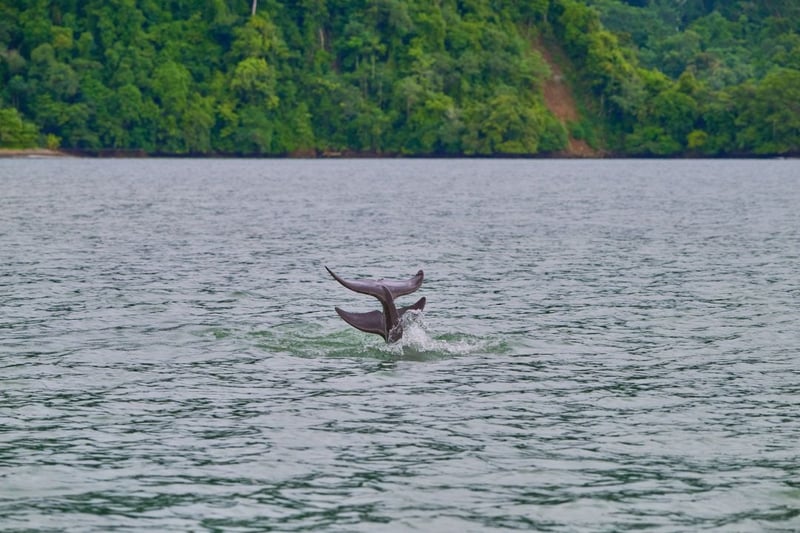
In the warm, tranquil waters of Costa Rica’s Golfo Dulce Whale Heritage Area, a new life is beginning. Her name is still unknown as she is only weeks old, but her arrival has brought new energy to the inlet’s resident dolphin community.
Her mother, Star, is a bottlenose dolphin known for her calm presence and named for her popularity and strong social bonds. And now, with her tiny calf swimming tightly at her side, she is showing us what love looks like in the wild.
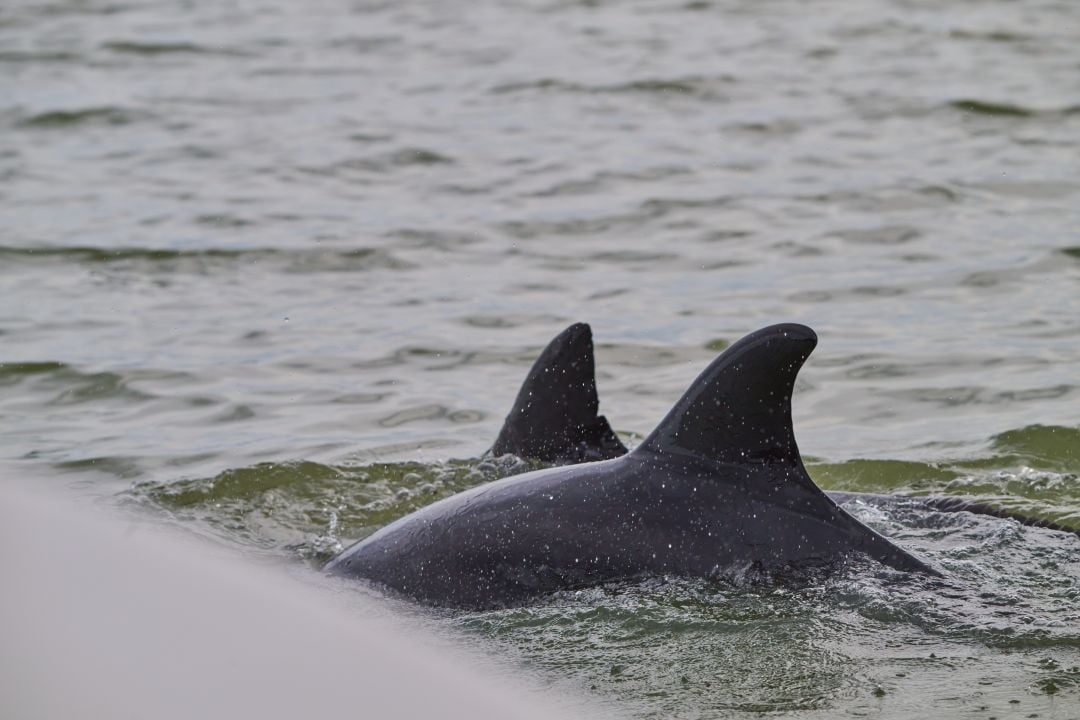 Star and her young calf. (Photo: World Animal Protection / Sasha Rink)
A safe haven for families
Golfo Dulce is one of the most important marine ecosystems in Central America and one of the only tropical fjords in the world. Its sheltered waters are rich with fish, mangroves and seagrass meadows – everything a dolphin mother needs to raise her young safely.
Because this area has earned the distinction of a Whale Heritage Area – part of the global network of Wildlife Heritage Areas, developed by the World Cetacean Alliance and World Animal Protection – it is managed with community-led conservation at its heart. Here, dolphins are not entertainment. They are respected as sentient, social beings who deserve to live freely.
And thanks to supporters like you, World Animal Protection has been working with local partners to ensure Golfo Dulce remains a haven for wildlife. That means promoting responsible ecotourism and protecting the ecosystems these dolphins rely on.
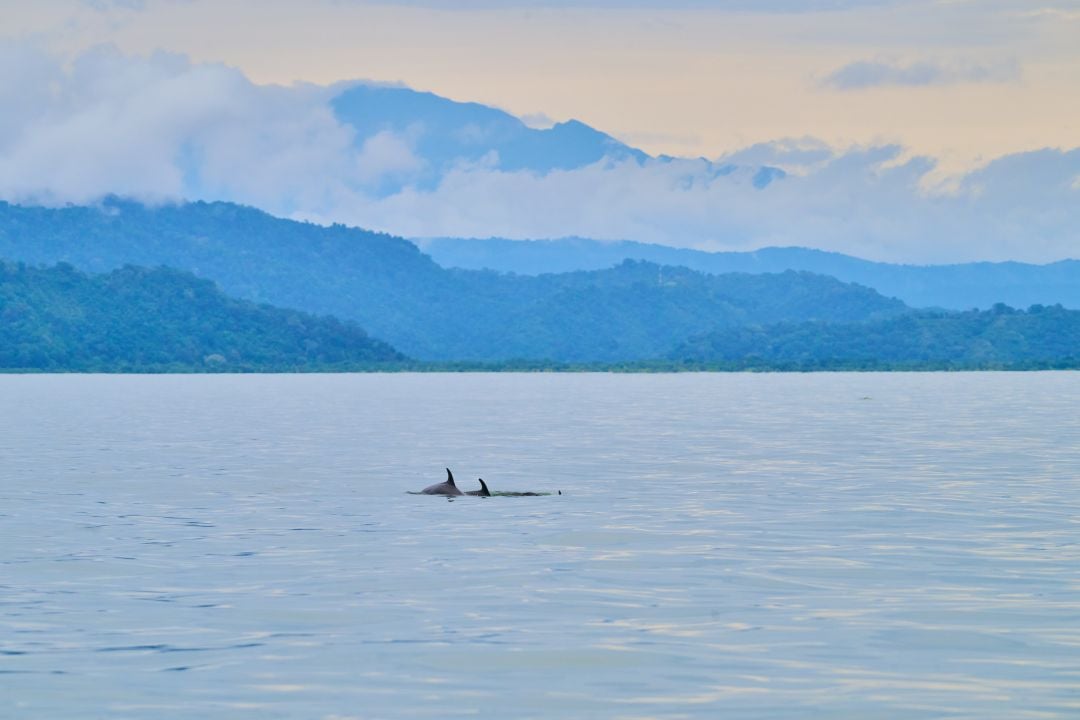 Wild dolphins in Golfo Dulce Whale Heritage Area (Photo: World Animal Protection / Sasha Rink)
A mother’s love: how Star keeps her calf safe
For the first months of life, a dolphin calf depends entirely on their mother. From the moment she was born, Star’s little one has relied on her for:
- Nourishment: Dolphin milk is rich and energy dense. Star nurses her calf throughout the day, helping her grow quickly and build the strength needed for life in the sea.
- Safety: Calves lack the stamina and experience to navigate threats. Star positions herself so her calf can draft behind her, conserving energy and avoiding danger.
- Learning: Everything a dolphin knows, from how to hunt to how to communicate, is taught through imitation. Star will guide her calf through each new behaviour, offering patience and reassurance along the way.
- Emotional connection: Dolphins form deep social bonds. Star and her calf swim in synchronized movements, exchange gentle touches and communicate through clicks and whistles. These interactions aren’t just functional, they’re a form of affection.
As the months pass, Star’s calf will slowly become more independent. She’ll begin to explore the mangrove-lined shallows, play with other young dolphins and learn to catch fish under her mother’s watchful eye.
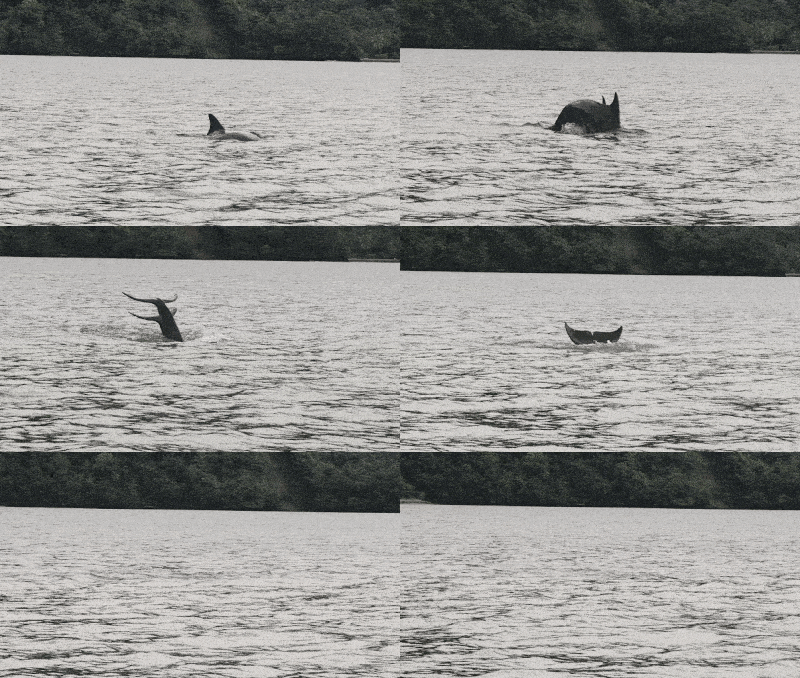 Star and her calf (video by Siobhan Williams)
All of this is possible because she was born into protected waters, not a barren, concrete tank.
Around the world, thousands of dolphins are trapped in captivity, denied the ability to form natural families, socialize freely or swim great distances. Star’s story shows another future – one where dolphins can live full, complex lives in the wild.
Your impact reaches far beyond Canada’s shores
By supporting World Animal Protection, you are helping safeguard places like Golfo Dulce – places where mother dolphins can raise their young in peace and where future generations of wildlife can flourish.
Star and her calf remind us that love in nature is not about grand displays. It’s about protection, patience and the freedom to grow.
Thank you for helping make that possible.
Learn more:
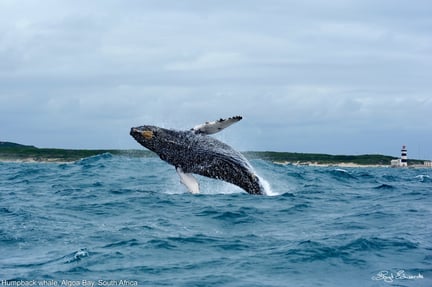
Whale Heritage Areas
Whale Heritage Areas are a global accreditation scheme that recognizes venues that offer and promote responsible and sustainable wild whale and dolphin watching.
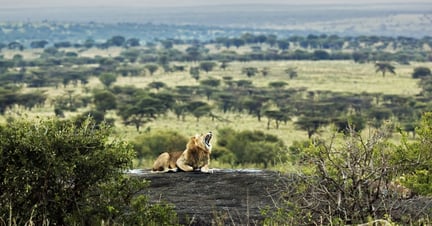
Wildlife Heritage Areas
Wildlife Heritage Areas are places where a deep and respectful connection exists between a guardian community and a wild species, species group, or habitat.
Whale Heritage Areas are part of the global network of Wildlife Heritage Areas, developed by the World Cetacean Alliance and World Animal Protection.