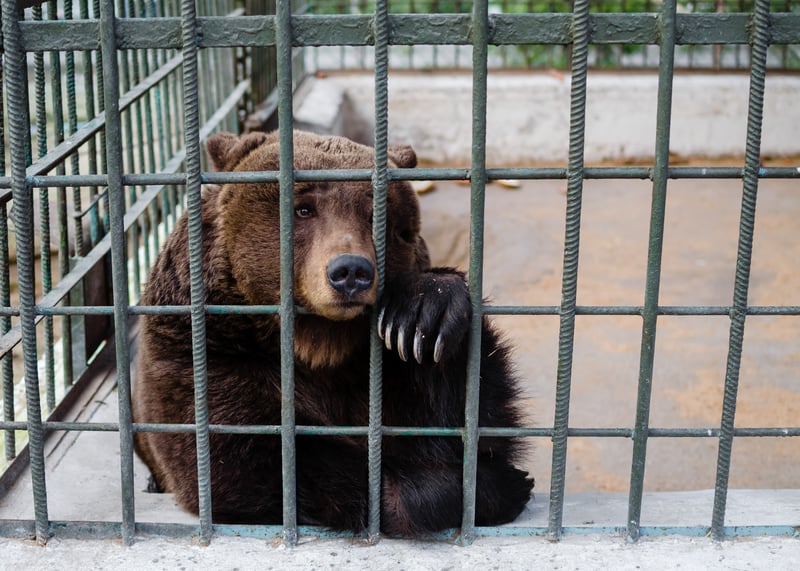
When animals repeatedly try to escape, their behaviour may be telling us something. Discover what escape attempts can reveal about the challenges animals face in captivity.
For animals living in captivity, escape attempts can offer a glimpse into how they experience their surroundings. Every situation is different, but repeated attempts to get out may be a sign of stress, frustration or a natural desire to explore beyond the limits of their enclosure.
Animals have complex physical and behavioural needs, and meeting those needs in captivity can be challenging. Looking into why animals attempt to escape can help us better understand their behaviour and ask important questions about their welfare.
What do animal escape attempts look like?
Animal escape attempts can happen in many captive settings, from zoos and aquariums to wildlife parks and other facilities where wild animals are kept in enclosures. What an escape attempt looks like often depends on the species, its natural abilities and the type of barrier surrounding it.
- Big cats and other large mammals: Lions, tigers, leopards and other large mammals may try to climb, jump over or push against enclosure barriers. Some may dig beneath fences or repeatedly test weak points, gates and barriers.
- Primates: Monkeys and apes are naturally agile and curious. They may climb fences, reach through barriers, manipulate enclosure features or use objects to get closer to an exit.
- Birds: Birds may fly toward enclosure barriers, squeeze through openings or find gaps in netting. Those kept in aviaries may repeatedly test the edges of their enclosure as they look for a way beyond it.
- Reptiles and amphibians: Snakes, lizards and other reptiles may push against glass or other enclosure walls, climb or squeeze through openings. For turtles, repeatedly moving toward the edges of an enclosure or pushing against glass can be one form of escape-related behaviour.
- Marine animals: Dolphins, seals and other marine animals may repeatedly rub or gnaw on glass or the edges of their enclosures, a stereotypic behaviour that signals frustration or boredom. .
- Farmed and domesticated animals: Escape attempts aren't limited to wild animals. Pigs, cows, donkeys, horses and other animals may push through gates, jump fences, squeeze through openings or break through barriers when confined.
Turtles persistently approaching the edges of their enclosure and pressing against the glass in an apparent attempt to escape. (Footage: Erin Ryan / World Animal Protection)
While these behaviours look different across species, they share a common thread: an animal attempting to move beyond the space available to them.
Why might animals try to escape?
Animals don't try to escape for just one reason. Every species has different needs, and an escape attempt can be influenced by an animal's surroundings, behaviour and individual circumstances. However, certain conditions may make escape-related behaviour more likely, such as:
- Limited space: Wild animals are adapted to move through large, varied environments. When an animal has limited space to move and explore, they may repeatedly test the boundaries of their enclosure.
- Lack of stimulation: Animals need opportunities to explore, forage, hunt, climb, swim and interact with their surroundings. Environments that lack opportunities for natural behaviours can lead to frustration or repetitive behaviours.
- Stress and fear: Loud noises, crowds, unfamiliar surroundings, conflict with other animals or handling can be stressful. In some situations, an animal may try to move away from something they perceive as threatening.
An escape attempt on its own doesn't tell us exactly what an animal is experiencing. But when an animal repeatedly tries to leave, it is worth looking at the conditions around them and asking whether their physical and behavioural needs are being met.
Make a difference for captive wildlife
If you've ever visited a wildlife attraction and noticed an animal repeatedly pacing, digging, pushing against barriers, climbing fences or trying to get out, you’re likely not at a location that implements high animal welfare standards. Instead, aim to support wildlife experiences that put animal welfare first, such as genuine sanctuaries and reputable rescue organizations.
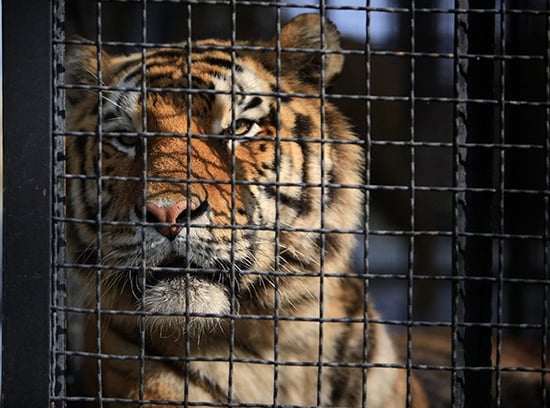
Sign the pledge to stop roadside zoos
Help create a future where wild animals are not kept in poor conditions for entertainment.