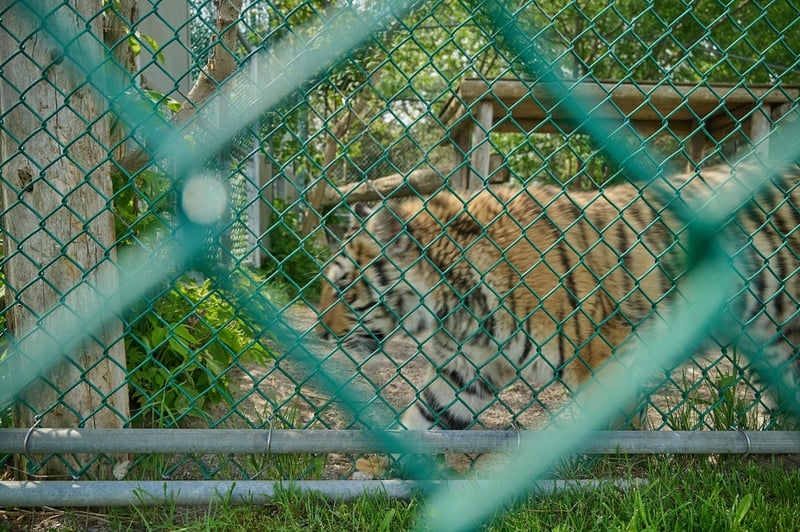
Pacing, swaying, feather-plucking... these behaviours, known as stereotypies, are signs of deep psychological distress.
Have you ever seen a captive tiger pacing back and forth in a loop or an elephant swaying endlessly in place? These repetitive behaviours, while common in captive animals, are far from normal. These behaviours are never observed in wild animals who are free to roam, forage, socialize and engage in natural behaviours. Known as stereotypies, they are a clear sign that an animal is experiencing distress, frustration or boredom.
One study estimates that there are over 85 million animals around the world displaying stereotypical behaviours.
They’re not harmless quirks – they’re a red flag for poor welfare. 🚩
Quick facts about stereotypies
- Stereotypies are repetitive, functionless behaviours
- They are not seen in wild animals living naturally
- Common signs include: pacing, rocking, bar-biting, feather-plucking
- They are caused by stress, boredom, and lack of stimulation
- Over 85 million animals globally may display these behaviours
- They are widely considered a key indicator of poor animal welfare
What are stereotypies?
Stereotypies are meaningless, repetitive movements that appear to have no clear goal or function. Common examples include pacing, rocking, head-tossing, bar-biting, excessive chewing or licking and even self-mutilation.
Why do animals develop stereotypies?
These behaviours typically develop in environments where animals are unable to express their natural behaviours - such as in zoos, aquariums, factory farms or other forms of confinement that restrict movement, stimulation and social interaction.
Stereotypies are often a response to chronic stress, frustration or boredom. When animals are deprived of choice, space or proper enrichment, they may develop these repetitive behaviours as a coping mechanism. For example, animals that naturally roam large distances, hunt, forage or socialize in complex ways can suffer immensely when confined to barren enclosures.
Lack of mental stimulation, isolation from others of their kind and a predictable, unstimulating routine can all contribute to the development of stereotypies.
Examples of stereotypies in different animals
Wild animals in captivity in zoos, aquariums and tourist attractions
- Elephants in captivity often sway, rock, or bob their heads for long periods. These repetitive motions are a sign of stress, boredom, and lack of space to roam – something wild elephants do over vast distances each day.
- Tigers, lions and other big cats frequently pace back and forth along the edges of their enclosures. Pacing is a stereotypy caused by frustration and the inability to perform natural hunting or roaming behaviours.
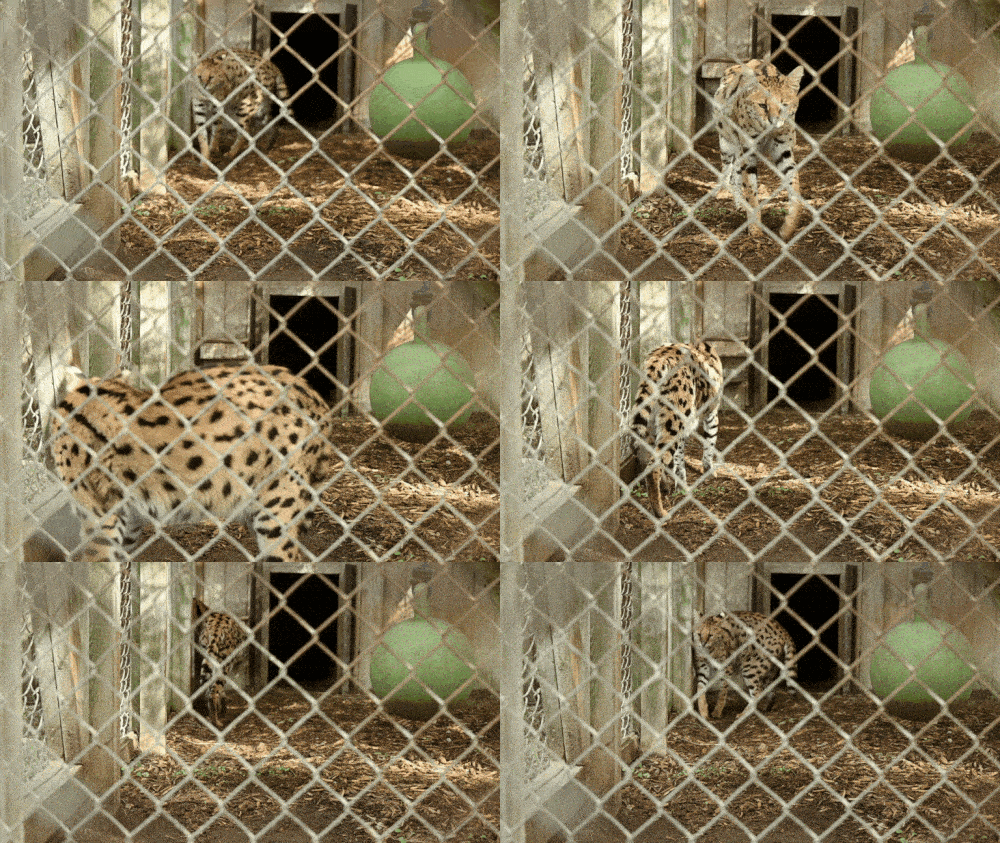 A captive serval in a roadside zoo pacing back and forth. (Footage: Sasha Rink / World Animal Protection)
- Bears may circle repeatedly, sway their heads, or lick their paws excessively. These behaviours often develop in small, barren enclosures where mental stimulation and space are limited.
- Whales and dolphins in captivity often show signs of psychological distress. Dolphins may swim in tight, repetitive loops, while whales may float listlessly at the surface (a behaviour known as logging) or exhibit jaw-popping, an aggressive or agitated response. These stereotypies reflect the deep impact of confinement and the inability to perform natural behaviours like diving, migrating, or socializing in large pods.
- Giraffes, horses, and other captive herbivores may develop a stereotypic behaviour known as crib-biting – biting down on fences, rails or other fixed objects and pulling back, often accompanied by a grunting or sucking sound. This behaviour is a response to stress, frustration or lack of foraging opportunities, especially in environments that restrict movement and fail to provide adequate enrichment. In the wild, these animals would spend much of their day grazing or browsing across wide areas – natural behaviours that are severely limited in captivity.
A giraffe displaying crib-biting behaviour at a roadside zoo in Ontario. (Footage: Sasha Rink / World Animal Protection)
Wild animals in the pet trade
- Parrots and other captive birds often develop feather-plucking – pulling out their own feathers due to stress, loneliness, or boredom. In some cases, they may pluck until they cause skin damage or infections.
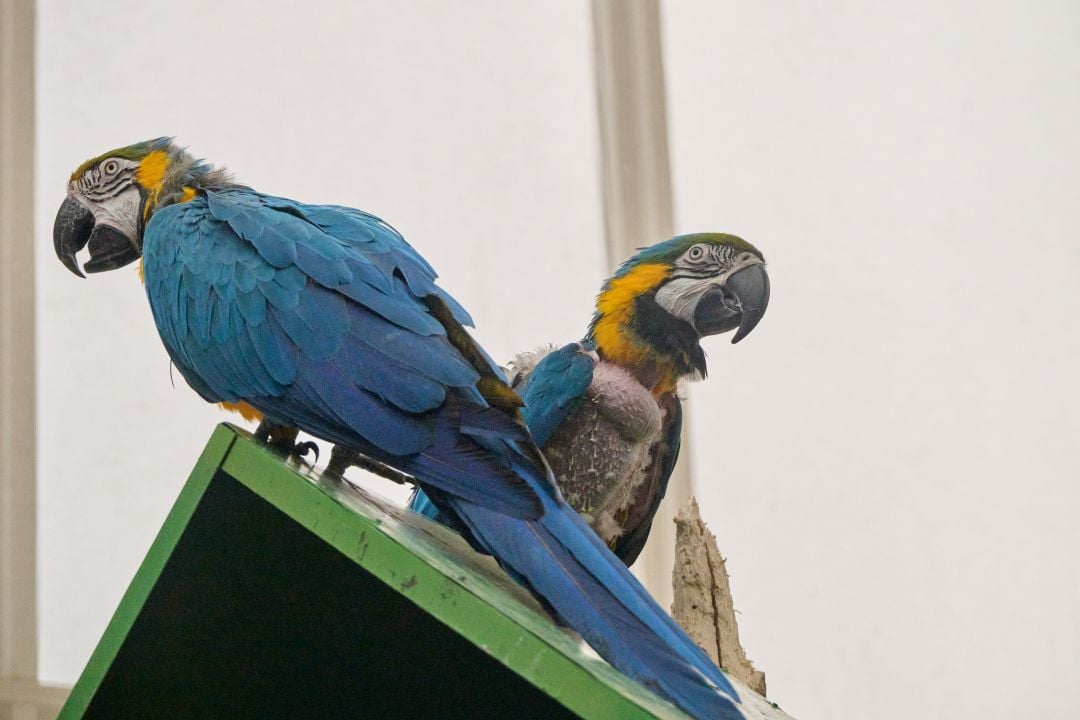 Hyacinth macaws in captivity with feathers missing from their chest, presumably from feather-plucking. (Photo: Sasha Rink / World Animal Protection)
- Snakes and lizards in small or poorly designed enclosures may repeatedly rub their noses against glass or walls in escape attempts. This can lead to injuries and is a sign their environment does not meet their basic needs.
Why are stereotypies a serious welfare issue?
Stereotypies are indicators of extreme mental and physical suffering. These behaviours are rarely, if ever, seen in animals living naturally, where they are free to roam, forage, socialize and express their natural behaviours and instincts.
In captivity or confinement, however, animals develop stereotypies as a desperate response to stress, boredom and frustration.
Stereotypies are symptoms of broken systems, and they remind us of the urgent need to protect animals from environments that cause such lasting harm.
How can stereotypies be prevented?
Stereotypies can be reduced by improving living conditions, such as providing more space, enrichment and opportunities for natural behaviours.
For wildlife in captivity, enrichment programs can be used to encourage natural behaviours and reduce stress. However, even the best captive environments cannot fully replicate life in the wild and these behaviours may persist.
For farmed animals, higher-welfare systems, such as access to bedding, outdoor space and the ability to root or graze, can help reduce stress and behaviours like bar-biting or sham chewing. But in intensive systems where movement and stimulation are limited, stereotypies remain common.
While improvements can reduce suffering, they don’t address the root cause: confinement and restriction of natural behaviours.
Banner image: A tiger pacing in a roadside zoo in Ontario (Photo: World Animal Protection / Sasha Rink)
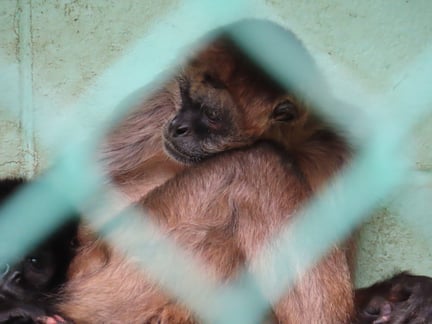
Speak out for captive wildlife in roadside zoos
There is a critical situation in Ontario: due to a lack of provincial zoo regulations, there are over one thousand wild animals being held captive in degrading conditions.