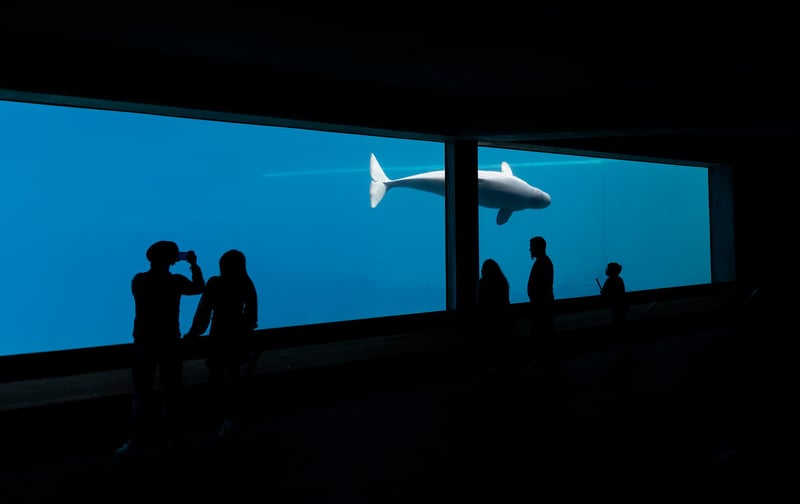
Statement on the transfer of Marineland’s belugas to U.S. and Spain
News
The dismantling of Marineland shows that Ontario can no longer avoid action and must close its legal gaps and implement a unified provincial licensing framework.
We are relieved to know that the whales will no longer be subjected to a standing and persistent threat of euthanasia by Marineland. As these animals are relocated, we urge the receiving facilities in the United States and/or Spain to uphold the spirit of Canadian law by not breeding and refraining from using them in performances or other forms of entertainment. We hope the federal government will equally support this request when issuing the permits. These animals deserve to have their welfare prioritized and live the remainder of their lives focused on their well-being.
The fact that multiple facilities across different countries are needed to appropriately accommodate these animals underscores the scale of Marineland’s failure to provide responsible, long-term care. Wild animals should never be amassed and treated as commodities to be collected, bred and transferred between facilities when circumstances become unsustainable.
The Marineland situation is the result of decades of inadequate oversight and weak protections for captive wild animals. It must serve as a catalyst for meaningful change. The Ontario government now has an opportunity and responsibility to strengthen protections for wild animals in captivity and prevent a similar crisis from occurring again.
Ontario continues to lag other Canadian provinces when it comes to regulating captive wildlife. For decades, facilities such as Marineland have operated in a regulatory environment lacking robust licensing requirements, comprehensive animal welfare standards, meaningful oversight mechanisms, and strong accountability measures.
The tragedy of Marineland has been decades in the making, and now it’s up to the Ontario government to close the longstanding legal gap to ensure a crisis like this can never happen again. World Animal Protection has been in conversation with the provincial government about policy changes that will address this issue, and we hope they will continue to engage with us proactively and with the intention to act.
Take action: Demand Provincial accountability
The unraveling of Marineland is a stark reminder of why Ontario must address this crisis at its root. Ontario has no provincial zoo licensing, no permit requirement for non-native wildlife, no meaningful public safety and security standards, and no mandatory liability insurance requirements for zoos. This is why Marineland was able to amass so many animals, and why Ontario has more roadside zoos than anywhere else in the country.
Right now, the responsibility for managing dangerous and exotic wildlife falls onto individual municipalities, even though they are not equipped with the specialized resources, wildlife experts or enforcement budgets required to police complex captive wildlife facilities.
This patchwork approach results in massive regulatory gaps that leave animals and communities vulnerable. We see the heartbreaking results of this system across the province, from animals languishing in substandard roadside zoos to the ongoing crisis at Marineland.
World Animal Protection has provided the Government of Ontario with practical, evidence-based policy recommendations aimed at strengthening provincial laws, closing longstanding regulatory gaps, and establishing a comprehensive oversight framework for captive wildlife facilities
The time for leadership is now.
To ensure a crisis like this can never happen again, the province needs a single, enforceable provincial licensing framework that prioritizes animal welfare over commercial utility. Dozens of municipalities across Ontario have already stepped up by passing our unified resolution demanding a provincial standard, and now, your MPP needs to hear from you.
Tell your MPP: Support a unified provincial framework to protect captive wildlife.
Banner photo: Sasha Rink / World Animal Protection