Dolphin facts | World Animal Protection Skip to main content
Home
DONATE
  • Home
  • About us
  • Our work
    • Animals in disasters
    • Animals in farming
    • Animals in the wild
    • Reports library
  • News
    • Impact for animals
    • Media centre
    • Publications
  • Education
    • Animal facts
    • Animal quizzes
    • Kids activities
    • Animal welfare education
  • Ways to give
    • One-time donation
    • Monthly donation
    • Active fundraising campaigns
    • Corporate partnerships
    • Legacy gifts and securities
    • BMO World Animal Protection Mastercard
    • Workplace giving
      • Companies with matching gift programs
    • Send an eCard
    • ECHOAGE birthdays
    • Donate a vehicle
  • Take action
dolphins

Common name: Dolphin | Scientific name: Delphinidae |
Distribution: Temperate and tropical waters around the world 

  1. Home ›
  2. Dolphin facts
Connect with us:
  • Facebook
  • Twitter
  • YouTube
  • Instagram

Dolphin facts

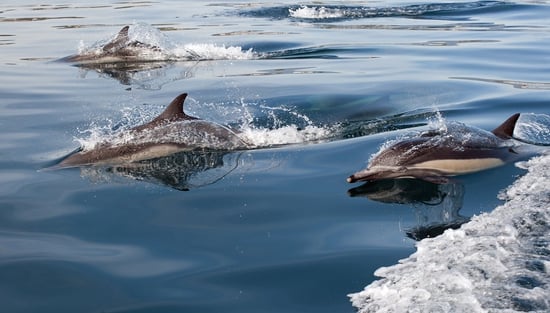
Dolphins are warm-blooded marine mammals that breathe air. They are highly intelligent, sociable and playful animals found throughout the world’s oceans.  

Ocean dolphins range in size from the smallest, Māui dolphin, to the largest known dolphin, the Orca or killer whale.  

Dolphins are extremely powerful animals. Some species can swim up to speeds of 50kph and regularly dive to depths of up to 55 metres to forage for their favourite foods of fish and squid.  

Travelling and hunting in pods, dolphins have big territories, on average around 100km². 

Dolphins help keep our environment in balance by eating other animals. Scientists also see dolphins as indicators of the health of our oceans.  

Dolphins communicate in many different ways – including squeaking, clicking and whistling. Each dolphin has a unique whistle – it helps them recognise each other – meaning whistles work very much like human names. They also use high-pitched clicking sounds for echolocation – to help them navigate and find food. The clicks hit objects in the water and then bounce back as echoes. This helps dolphins work out what and where objects are.   

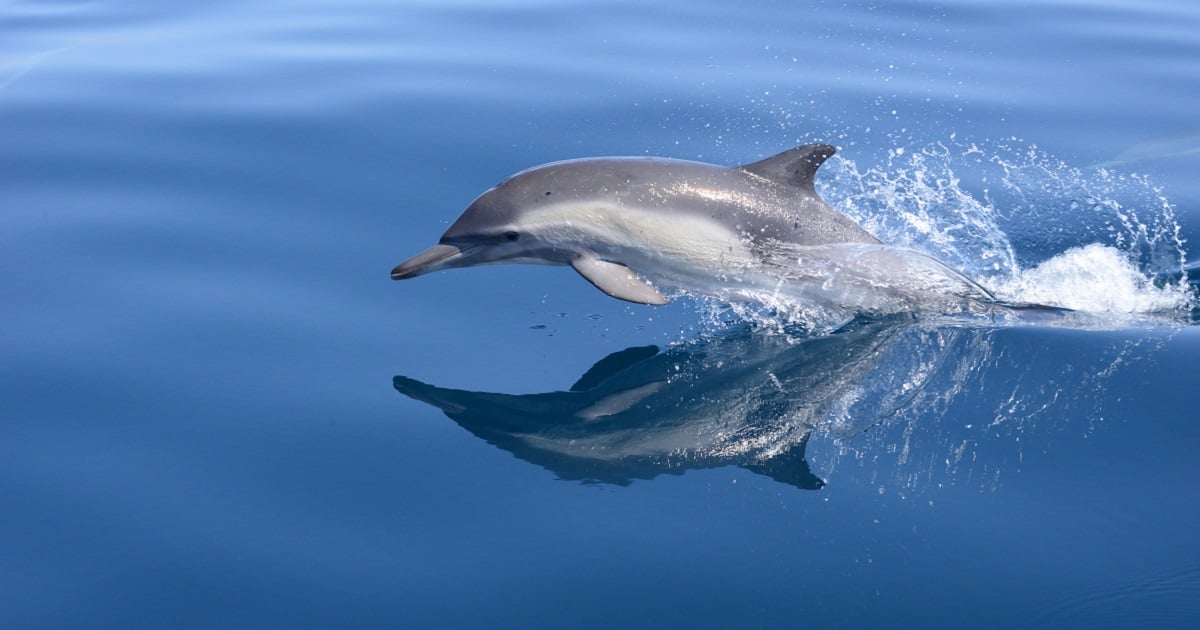
Despite what some people think, dolphins don’t communicate by smiling when they are happy. The ‘smile’ on their face is simply their jaw shape. 

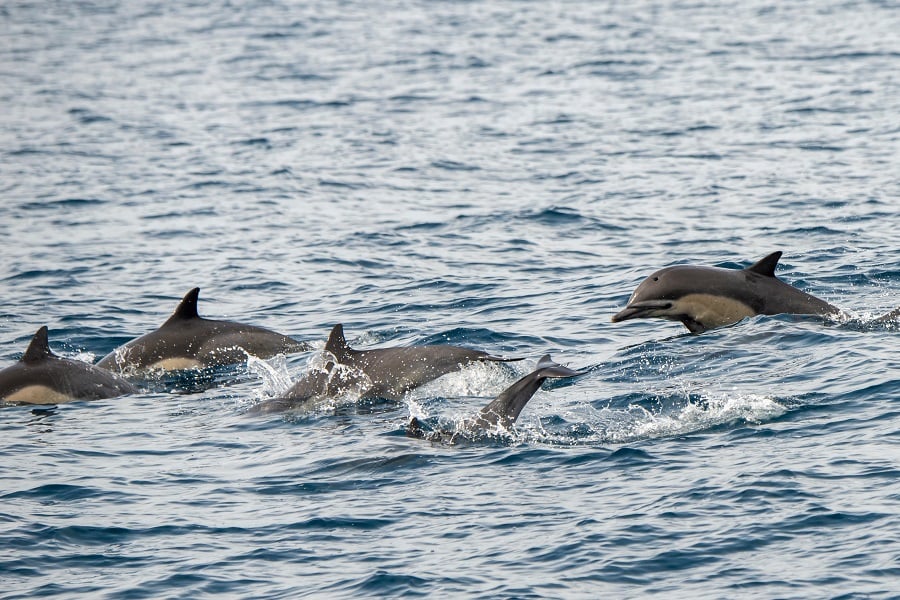
Wild dolphins off the Galapagos Islands
Credit: NOMADasaurus

Dolphin page breaker.

The problem with dolphin captivity

Dolphin exploitation stats.

Throughout the world, more than 3,000 dolphins have been bred in captivity or taken from the wild to be used for entertainment in tourism venues. From their traumatic capture from the wild to being bred in confinement in grossly inadequate conditions, dolphins suffer immensely in captivity.

Captive dolphins can live up to 50 years in small, barren and sometimes chlorinated tanks, pools and lagoons. Did you know dolphins can swim 100 km in a day? Even in the largest captive facilities, dolphins have access to far less space than that. So, they swim in circles or float without moving on the surface of the water – because they’re bored and/or stressed.

Keeping dolphins in captivity for entertainment offers no genuine benefit to conservation and scant educational benefits, despite claims to the contrary from marine entertainment venues. It is inhumane and unethical to use captive dolphins for shows, petting, kissing and swimming attractions.

Instead, the tricks performed during shows include dolphins pulling their trainers through the water by their fins, and trainers ‘surfing’ on the dolphin’s back or being propelled out of the water by the dolphin’s snout. Often, dolphins are made to leave the water to spin in circles, or wear hats or oversized glasses and all to music as loud as 110 dB – similar to the volume of a rock concert. 

For example, Sea World on the Gold Coast of Australia is the last venue to continue breeding dolphins in captivity. Dolphins like Squeak were born at Sea World and have so far spent over three decades in the same pools, performing the same tricks, year after year.

Read our report: Behind the smile

Dolphin shows

How World Animal Protection is helping dolphins

World Animal Protection has been working to educate the public on the problem of keeping dolphins and marine animals in captivity since 1991.

The only solution to ending the suffering of dolphins in entertainment venues is to end captive breeding and wild capture, for good. But this can’t happen overnight. A series of actions must be taken – now – to move us closer to this end goal.

Dolphin facts: Exposing the cruelty through public education.
Dolphin facts: Urging industry and legislative change.
Dolphin facts: Researching and funding alternative experiences.

Public education:

We’re exposing the cruelty through public education and engaging visitors on an emotional level. They hold the power in their hands to make sure the profitable dolphin entertainment industry ends, and no further dolphins are bred into a life of captivity.

Industry and legislative change: 

We're engaging governments to create legislation that will put an end to captive breeding. In 2019, we achieved a ban on captive breeding here in Canada. Jurisdictions around the world are responding to the science by passing laws to ban or significantly restrict the captive display of marine mammals including Brazil, Bolivia, Canada, Chile, Costa Rica, France, India, Luxembourg, Norway, Switzerland, UK, and most recently New South Wales in Australia.

As well as changes from governments, major travel brands like Air Canada, Transat, Sunwing, WestJet, TripAdvisor, Virgin Holidays, British Airways Holidays and Booking.com have already committed to stop selling tickets to captive dolphin shows and encounters.  

Alternative experiences:

We're researching and funding alternative experiences where people can observe dolphins in their natural habitat in an authentic, respectful way through the Whale Heritage Site projects and our work helping design and campaign for Coffs Harbour to become a sea sanctuary site for former performing dolphins. This is the future of dolphin-based tourism.

Finding long-term, sustainable solutions

With our supporters’ help, World Animal Protection has been working with Dolphin Marine Conservation Park and Action for Dolphins since 2019 to get the proposed sea sanctuary up and running in Coffs Harbour, Australia. This brings us one step closer to giving the three remaining captive dolphins in Australia – Zippy, Bella and Jet – a new, more natural home. 

Together, we can make this the last generation of dolphins kept captive to entertain tourists.

In the news

wild dolphins

Canada bans the captivity of whales, dolphins and porpoises for entertainment!

10/06/2019

The passing of Bill S-203 is a major victory for animal welfare in Canada

A pod of spinner dolphins off the west coast of Oahu, Hawaii. Photo: World Animal Protection / Rachel Ceretto

Air Canada and Transat commit to stop selling and promoting cruel dolphin entertainment

30/10/2019

The commitment made by these Canadian travel companies will help put an end to the cruel dolphin entertainment industry and shift tourist demand toward more...

Watch our short animated film

Dolphins can't share their story but we can be their voice. See why we need to make this the LAST generation of dolphins in captivity:

Download a dolphin fun activity booklet for kids!

Looking for something to do with the kids? We've got a dolphin activity book with wild facts that will keep your kids engaged. Kids can colour in an ‘under the sea’ scene and solve a dolphin maze to help a lone dolphin swim to his pod. While it is suitable for all ages, do review the content before giving this activity book to children.

Dolphin Activity Book

Download dolphin activity booklet

Enter your info below to receive your copy of our dolphin activity booklet.

Read more about dolphins and animals in entertainment

Wildlife. Not Entertainers campaign

Ban dolphin breeding

  • twitter
  • facebook
  • linkedin
  • email

Join our community

Sign up to our mailing list and connect with us on social media. Together we are moving the world to protect animals.

Sign up to our mailing list

Receive updates with our latest news, petitions, appeals and campaigns successes.

Sign up

Connect with us

  • Facebook
  • Twitter
  • YouTube
  • Instagram
  • Contact
  • Face to face fundraising
  • Jobs
  • Media centre
  • Privacy Policy
  • Supporter Centre
  • Tax receipts

© World Animal Protection
Tel: 416 369 0044 Email:
info@worldanimalprotection.ca.
Canadian Charitable Registration #12971 9076 RR0001
Land acknowledgement for our Toronto office.