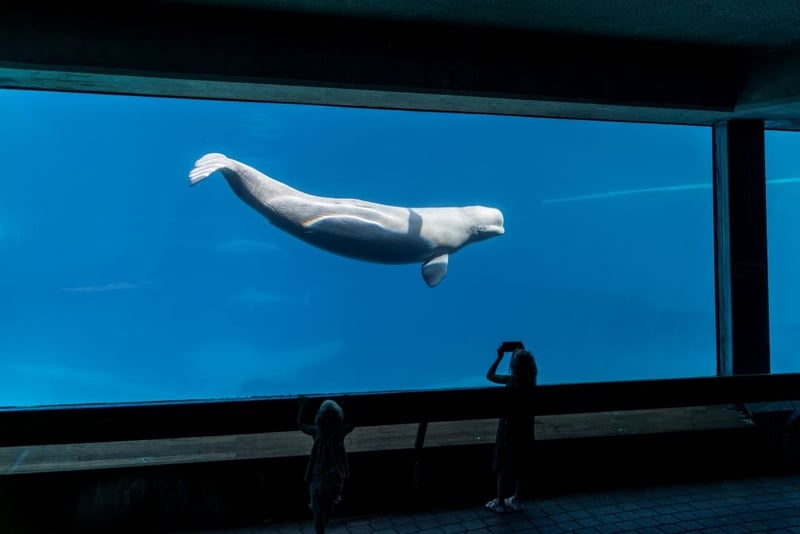
Why we need seaside sanctuaries
Blog
Seaside sanctuaries provide a humane alternative for whales and dolphins currently living in exploitative captivity.
For decades, whales and dolphins have been exploited for entertainment in aquariums and theme parks, made to perform for tourists and denied their natural behaviours. These intelligent, social creatures deserve more than a life confined to small concrete tanks. They deserve a chance to live in a more natural, fulfilling environment.
Around the world, sanctuaries already exist for land animals like elephants and bears, but for marine animals, this option has been largely missing – until now.
What is a seaside sanctuary?
Seaside sanctuaries like the one being built by the Whale Sanctuary Project in Nova Scotia can offer a humane alternative to captivity in marine parks.
A seaside sanctuary is a netted, natural ocean habitat where whales and dolphins retired from captivity can live permanently, while still receiving all the human care to which they have grown accustomed.
These sanctuaries provide:
- Significantly more space than concrete tanks
- Natural seawater and environmental conditions
- Opportunities for social interaction
- Enrichment that supports physical and mental wellbeing
Projects such as the Whale Sanctuary Project are working to establish this model as a long-term solution for captive marine mammals.
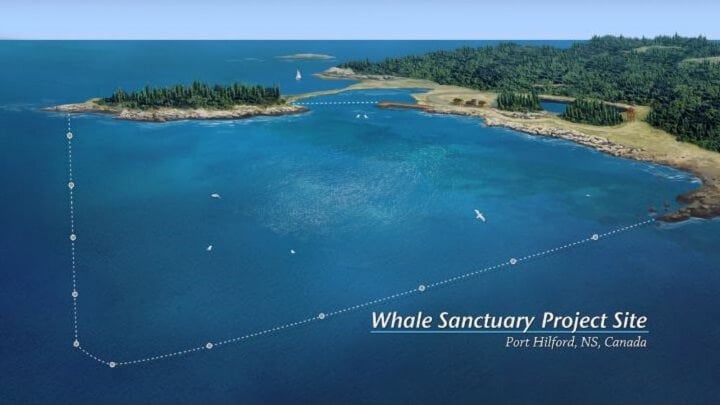 Rendering of the Whale Sanctuary Project Site provided by the Whale Sanctuary Project.
Why can’t captive whales and dolphins be released into the wild?
While some countries, including Canada, have passed laws banning the captivity of cetaceans, the challenge remains of what to do with the animals. For many, a return to the ocean is no longer a safe or viable option.
Years in captivity take a toll – captive whales and dolphins often suffer from poor health, weakened immune systems and psychological distress. Many were taken from the wild as calves and never learned the skills necessary to survive, while others were born in captivity and have never experienced the ocean. Simply setting them free could be a death sentence.
That’s why sanctuaries like the Whale Sanctuary Project are so critical. They offer a permanent home for whales and dolphins in captivity today – and we hope, the last generation to ever endure it. A habitat as close to their natural home as possible where these animals can live out the rest of their lives in peace and comfort – no longer forced to perform or entertain people.
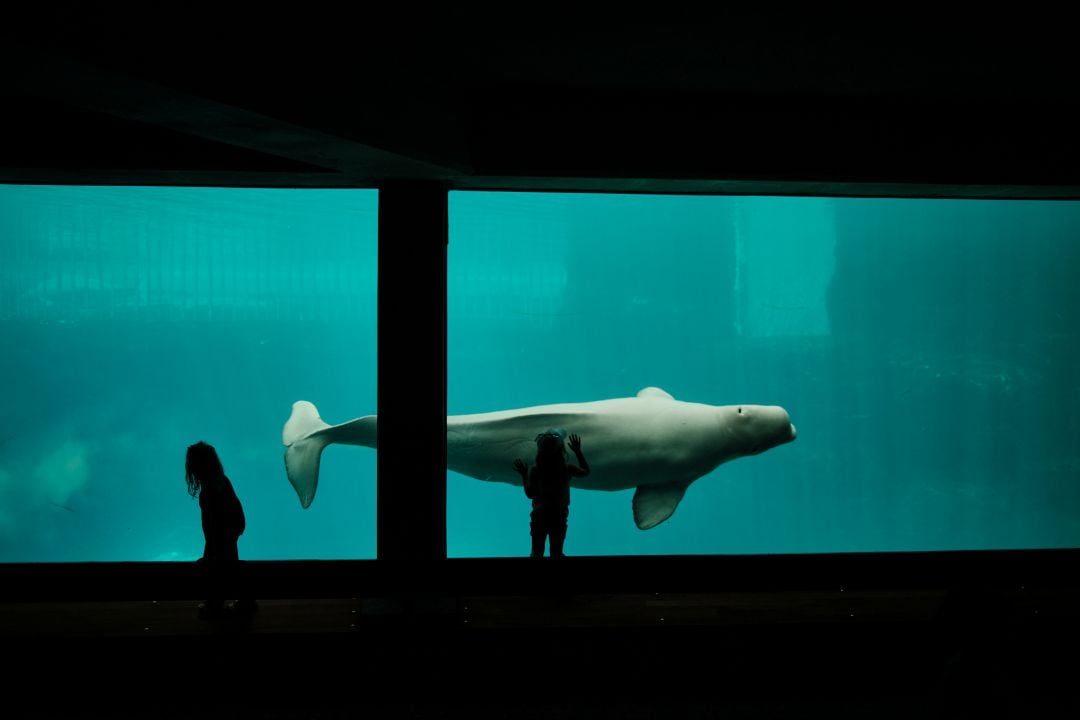 A captive beluga at Marineland of Canada (Photo: Sasha Rink / World Animal Protection)
A proven model: from land sanctuaries to the sea
Just as elephant-friendly venues have become a global model for giving exploited elephants a second chance and transitioning elephant venues away from elephant rides and shows, cetacean sanctuaries are an important solution for marine mammals retired from the entertainment industry.
Elephants used in circuses and tourism have been successfully rescued and relocated to spacious, natural environments where they rediscover their natural behaviours, form social bonds and heal from trauma. Cetacean sanctuaries aim to do the same – providing whales and dolphins with space to swim, dive and interact with others of their kind in a protected environment, free from performance demands.
The success of our elephant-friendly venue program proves that a better future is possible. Now, it’s time to extend that same compassion to whales and dolphins.
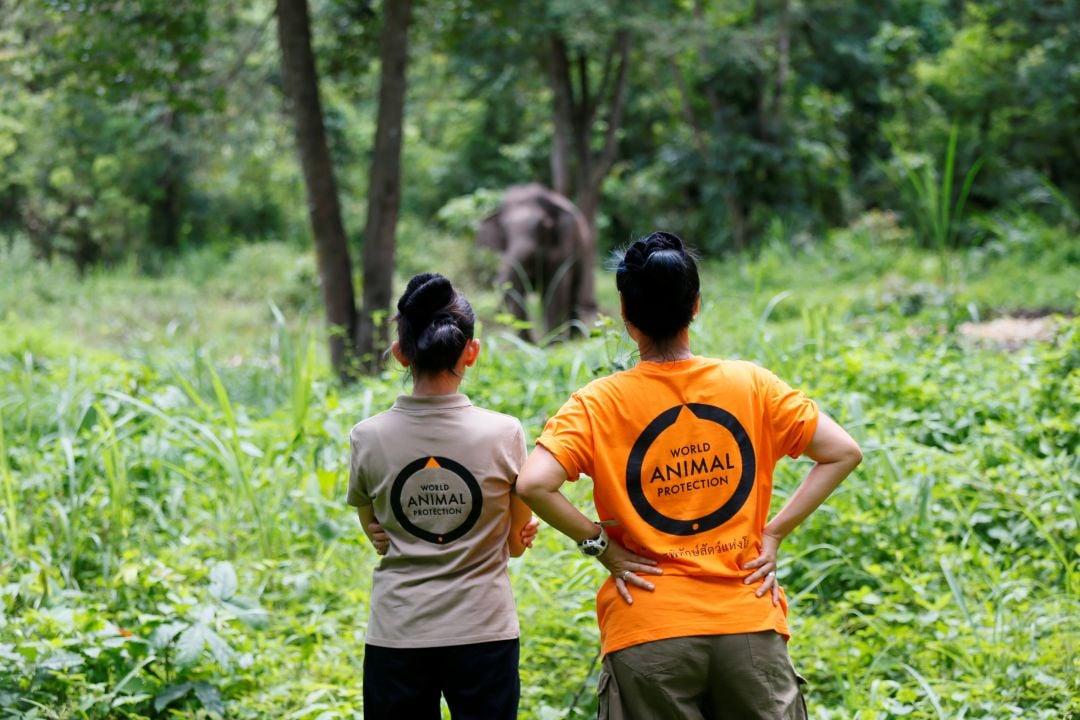 Formerly exploited elephants now living at an elephant-friendly venue (Photo: World Animal Protection).
How you can help
Right now, thousands of marine animals, including whales and dolphins around the world, are trapped in exploitative captivity, living in conditions that cause immense suffering.
You have the power to change the lives of these animals forever.
Your compassion will help captive whales and dolphins retire with dignity after years in cramped concrete tanks by supporting sanctuaries where rescued animals can thrive in naturalistic habitats. And you’ll expand Wildlife Heritage Areas where communities embrace ethical wildlife tourism that respects animals and supports local economies.
Together, we're building a world where no animals suffer for human entertainment.
Banner photo: A captive beluga at Marineland of Canada (Credit: Sasha Rink / World Animal Protection)