A turtle rescue story from Long Point
Blog
Our team got a firsthand look at turtle nesting and the people working behind the scenes to protect these incredible animals at Long Point Eco-Adventures.
Turtle nesting season is a vulnerable time for Ontario’s freshwater turtles. As females leave wetlands to lay their eggs, they can face risks from roads, predators and habitat disturbance. At Long Point Eco-Adventures, dedicated volunteers are working to protect turtle nests and support hatchlings through the earliest stages of their lives. The hatchery program belongs to the Long Point Biosphere Region, and is the only publicly displayed turtle hatchery in the area. Our team recently joined a turtle walk to see firsthand how community-led conservation protects local turtle populations.
Protecting turtles at Long Point
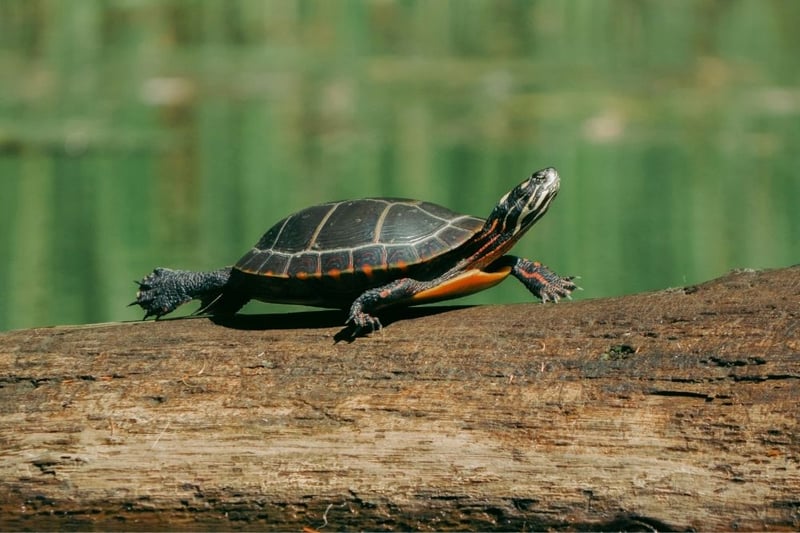
Long Point is a UNESCO World Heritage Site and home to several species of freshwater turtles, including snapping turtles, Midland painted turtles and Blanding’s turtles. Each species has different habitat and nesting needs, and turtles may use a range of wetlands, shorelines, forests and open areas throughout their lives.
During nesting season, females leave the water and search for suitable nesting sites, often returning to land each year to lay their eggs. Snapping turtles, for example, may choose sandy or loose soil near roads, trails or other open areas where they can dig a nest.
Once the eggs are laid and covered, the female leaves and does not remain with the nest or care for the hatchlings. This means the eggs are left to develop on their own, making the protection of suitable nesting areas especially important for the survival of young turtles.
Giving turtle eggs a safer start
Once a nest is identified, volunteers carefully assess what is needed to protect it. Some nests can remain where they were laid, with a protective cover placed over them to help prevent predators such as raccoons from reaching the eggs.
When a nest is considered too vulnerable to remain in place, trained volunteers can carefully collect the eggs and bring them to the hatchery. Each clutch is handled with care, labelled and monitored so volunteers can track its progress through incubation.
This hands-on work allows the team to protect eggs that may otherwise be lost, while keeping careful records of where they came from. Once the eggs hatch, the baby turtles are transported to the local marsh for release.
Witnessing turtle conservation firsthand
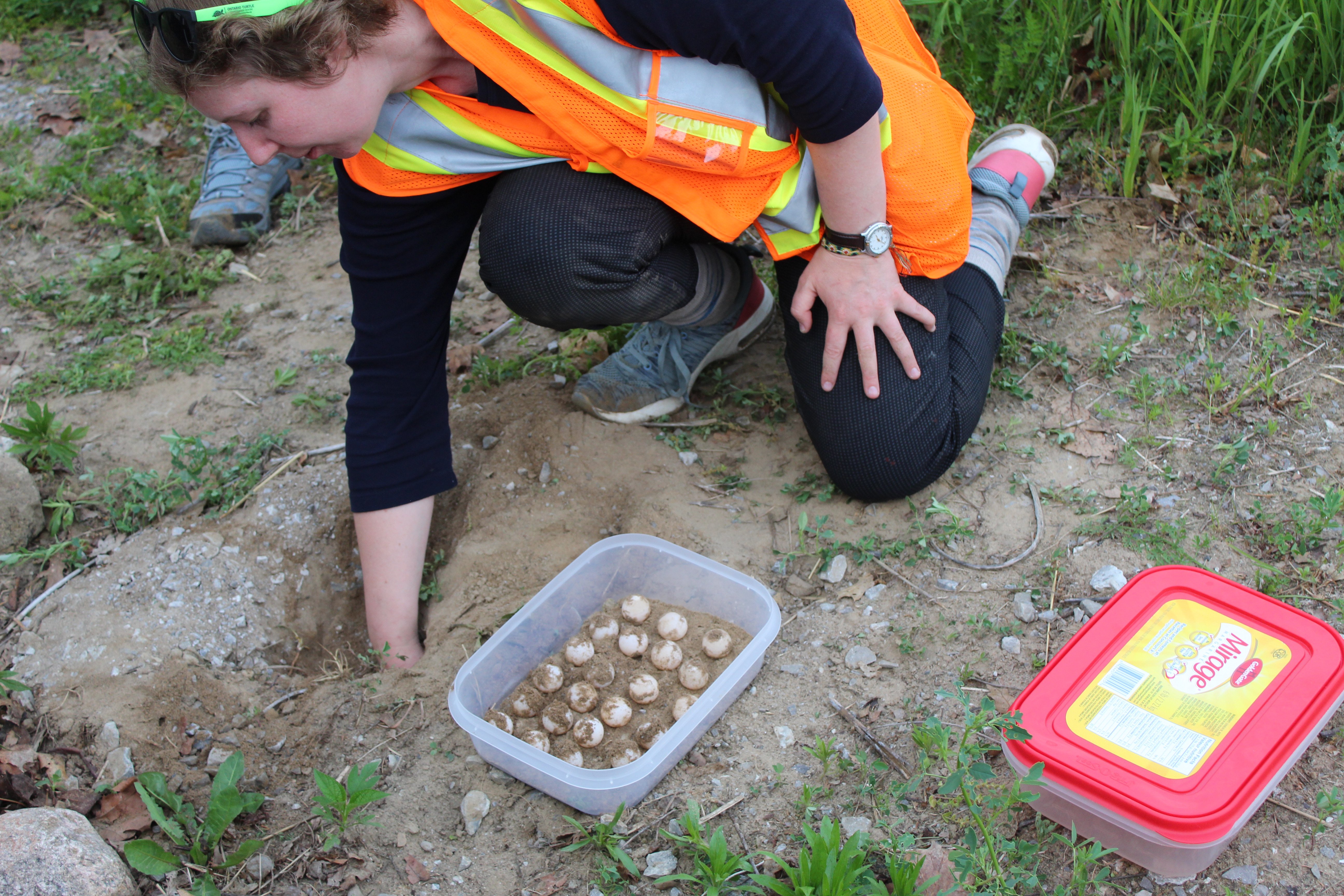 Lauren Nightingale, Program Coordinator for the Long Point Biosphere Region’s Turtle Hatchery transferring turtle eggs.
During a recent visit to Long Point Eco-Adventures, some members of our team joined a guided turtle walk and had the opportunity to watch a snapping turtle dig a nest, carefully lay her eggs and cover them with soil before leaving the site.
The experience provided a closer look at a part of the turtle’s life cycle that is rarely seen up close. The team also learned directly from the volunteers about the work involved in monitoring and protecting turtle nests.
Witnessing turtle conservation firsthand
A guided turtle walk can be a unique way to see local wildlife while learning about the habitats and conservation work that support it. If you’re planning a trip to a local hatchery, there are a few important reminders to consider, including:
- giving the animals space to behave naturally
- following your guide’s instructions
- staying on designated paths where possible
- avoiding touching, feeding or approaching turtles or their nests
- keeping noise and bright lights to a minimum
These simple precautions allow visitors to observe turtles without interrupting their behaviour, while learning more about the species that live in the area and the people working to protect them.
Join our community
Join a community of people creating a kinder world for animals and nature. Subscribe to our newsletter to learn more about wildlife, take meaningful action and stay inspired by stories of positive change from across Canada.