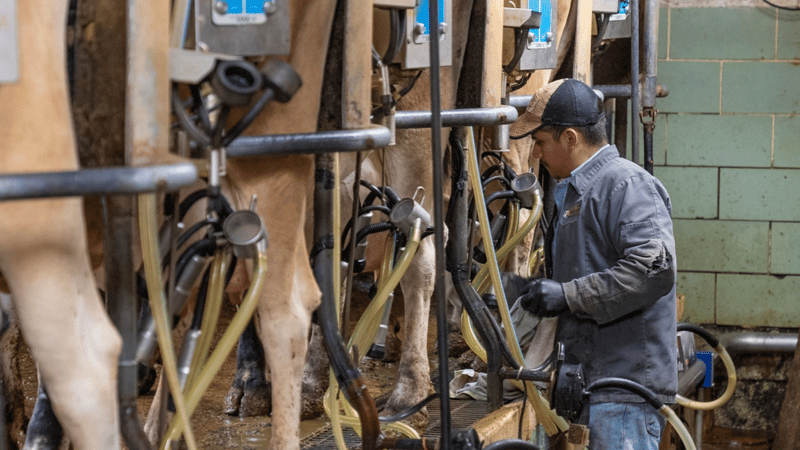
The people paying the price for cheap meat
Blog
Factory farming doesn’t just harm animals. It harms the people forced to sustain it.
Every day, billions of animals are raised and killed inside factory farms around the world. Their suffering is widely documented. But behind the walls of these facilities, another story is often overlooked – the people working inside them.
Factory farming doesn’t just harm animals. It also places workers in dangerous, high-pressure environments that can take a serious toll on their physical and mental health. The same system that confines animals in crowded, stressful conditions often places workers in similarly unsafe and exploitative workplaces.
Hazardous and exploitative work environments
Meat slaughtering, processing and packaging facilities are widely recognized as hazardous workplaces. Workers face sharp tools, heavy machinery and high-speed production lines, contributing to elevated rates of workplace injury.
In Canada, meat processing has repeatedly been identified as one of the highest-injury subsectors within manufacturing.
On high-speed processing lines, tasks are repeated hundreds or even thousands of times per shift. Workers may cut, lift or handle heavy animal carcasses for hours at a time, increasing their risk of:
- Repetitive strain injuries
- Musculoskeletal damage
- Cuts and amputations
- Chronic pain and fatigue
Beyond physical dangers, these jobs are often characterized by low wages, demanding conditions and intense production pressure.
The industry also relies heavily on migrant labour. Across Canada, many meatpacking jobs are filled through temporary foreign worker programs. Workers in these programs may have limited ability to change employers or report unsafe conditions, leaving them vulnerable to exploitation.
Exposure to illness and disease
The health risks extend beyond workplace accidents. Exposure to animal waste, biological hazards and infectious diseases can put workers at greater risk of illness, while crowded working conditions can increase the spread of infection.
Globally, an estimated 170,000 agricultural and meat industry workers die annually from work-related causes. The true toll is likely higher due to under-reporting, particularly among undocumented and marginalized workers who may fear job loss or deportation if they report injuries or unsafe conditions.
Serious mental health impacts
The psychological toll of industrial animal agriculture is also significant. Slaughterhouse workers experience depression levels four times higher than the national average. This emotional strain is linked to the pace and nature of the work, repeated exposure to animal suffering and pressure to meet high production targets. Slaughterhouse workers are involved in the deaths of more than 70 billion animals each year worldwide.
Farmers and feed industry workers also face mental health challenges, such as high levels of stress and anxiety, influenced by isolation, heavy workloads and financial pressures.
Additionally, studies suggest that occupational pesticide exposure is associated with increased symptoms of depression, with some evidence linking exposure to suicide-related outcomes among agricultural workers.
These challenging working conditions have been contributing to difficulties attracting and retaining workers, with labour shortages continuing to affect Canada's meat processing industry.
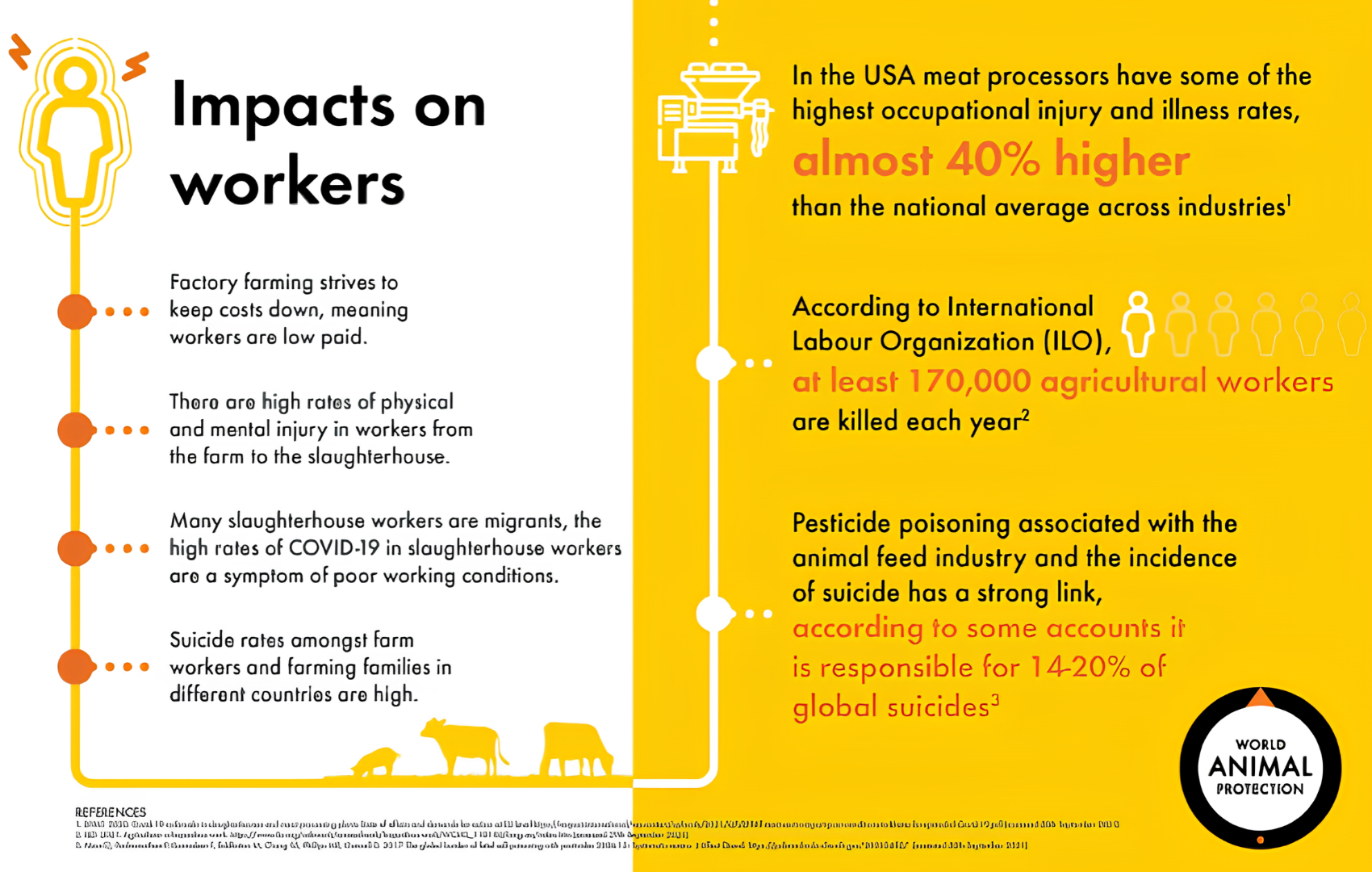
Infographic sharing the hidden health impacts on factory farm workers.
How you can help
It’s easy, eat less meat! Reducing your consumption of factory-farmed meat helps lower demand for an industry that not only harms animals but also exploits workers and threatens human health.
By choosing more plant-based meals and supporting humane, equitable and sustainable food systems, you’re not just protecting animals, you’re protecting people too.

Want to make more informed choices at the grocery store?
Download our free guide to understanding food labels and discover how to identify higher-welfare animal products.