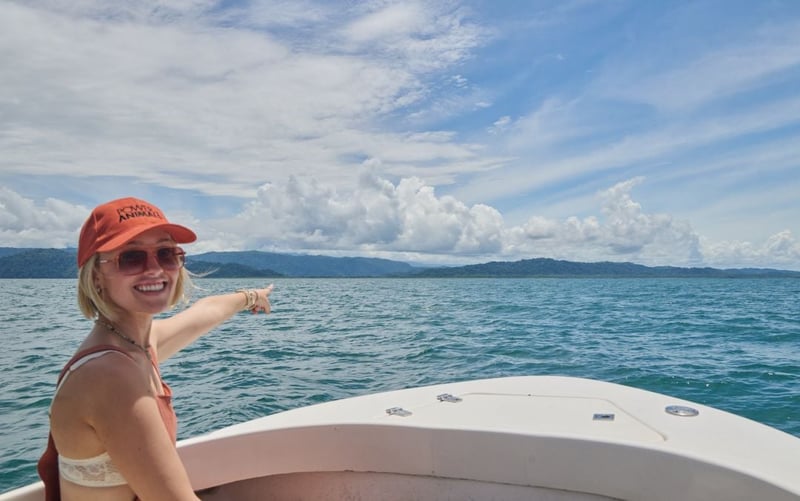
Inspired by her visit to Costa Rica’s Golfo Dulce Whale Heritage Area, actress, musician and animal advocate Siobhan Williams shares how travelling more thoughtfully can help protect animals, nature and the places we love.
Travel has always been one of my greatest joys in life. But one recent trip really helped open my eyes to what it means to truly travel responsibly.
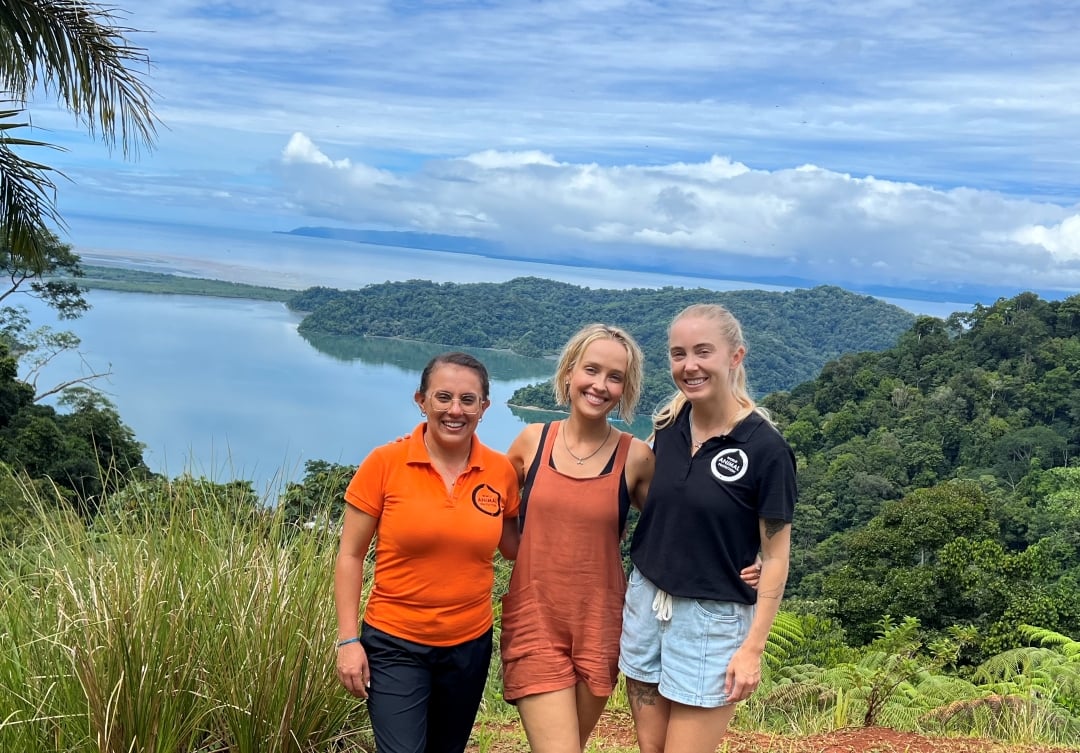
This fall, I had the chance to visit Golfo Dulce Whale Heritage Area in Costa Rica – an area where communities have come together to protect whales, dolphins and the entire marine ecosystem they depend on. Watching whales and dolphins move through the water and knowing that this place is protected not for profit - but for life - was deeply moving. It reminded me that travel can either take from a place or it can help protect it.
Since visiting this special place, I’ve vowed to always be intentional about how I explore the world.
Here are a few simple principles I always travel by:
1. I skip animal entertainment
No elephant rides. No dolphin swims. No tiger selfies.
These experiences are often sold as “once-in-a-lifetime,” but they always involve cruelty, confinement and suffering for the animals. Wild animals aren’t here for our entertainment – they belong in the wild.
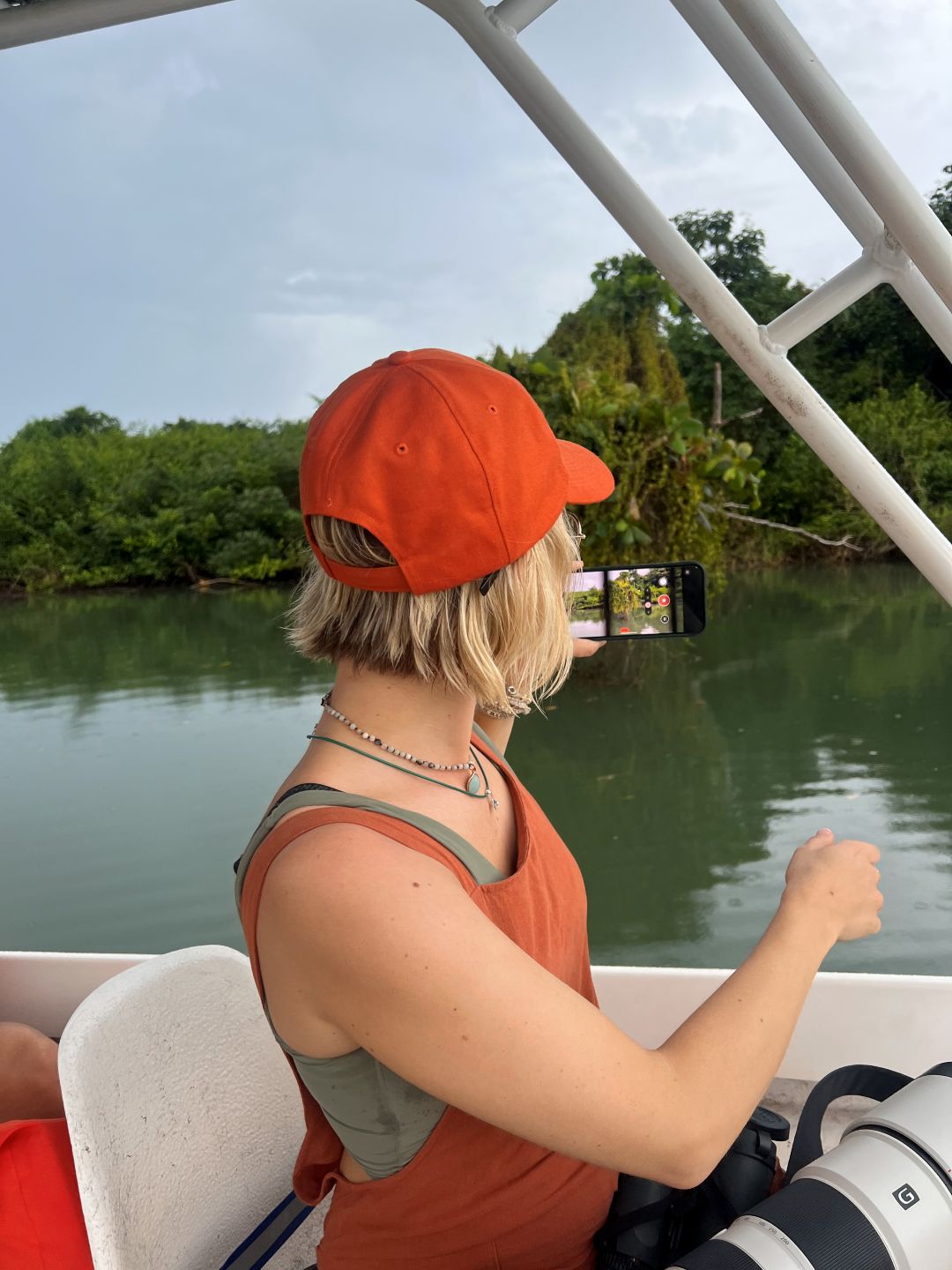
In Golfo Dulce, I went whale watching with a responsible, ethical tour operator: Changing Tides Tours. Observing humpback whales and dolphins roaming, playing and communicating in their natural habitat was unforgettable. Seeing an animal taken from the wild, forced to be in captivity and entertain people could never compare to observing them living their best lives, beautifully free in the wild where they should be. It proved that respectful wildlife tourism isn’t just possible – it’s infinitely better.
If you want a meaningful wildlife experience, look for opportunities to observe animals respectfully in their natural habitats, especially in places that prioritize conservation and community-led protection – like Wildlife Heritage Areas.
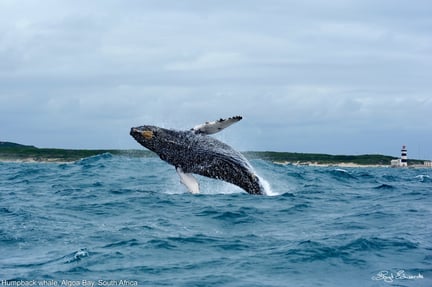
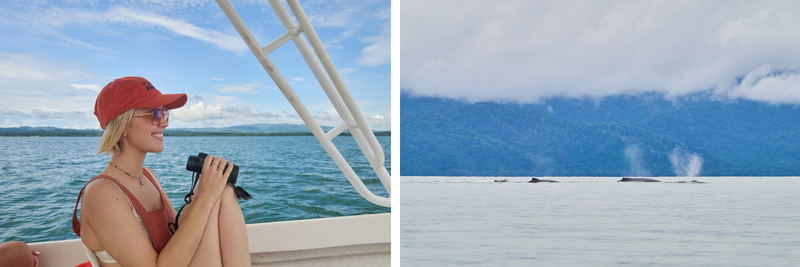 Whale watching with Changing Tides Tours. Right: A pod of humpback whales traveling together through Golfo Dulce. (Photos: Sasha Rink / World Animal Protection)
2. I support real sanctuaries, not roadside zoos
Not all places that call themselves “sanctuaries” truly are. Some are just attractions in disguise. On this trip I learned that there is no official accreditation or real steps a place needs to take to be able to call themselves a ‘sanctuary’ — which is appalling! So now I always do my research before visiting any facility that keeps animals captive. A true sanctuary:
- Doesn’t breed or trade animals
- Doesn’t allow touching, riding or performing
- Exists solely for rescue, rehabilitation or lifetime care - keeping only animals who would not be able to survive safely in the wild
When we support ethical sanctuaries and protected areas, we help shift tourism away from exploitation and toward real protection.
3. I choose eco-friendly places to stay
In Golfo Dulce, I stayed in a place that was deeply committed to protecting the surrounding rainforest and ocean, and it showed me how much of a difference thoughtful choices can make.
I now always look for accommodations that:
- Reduce waste and plastic use
- Conserve water and energy
- Respect the surrounding environment and local communities
It’s a small choice, but it helps reduce our footprint – and in sensitive ecosystems, that can make a big difference.
4. I try local, plant-based meals
One of my favourite ways to experience a new place is through food – and choosing plant-based, locally made meals is often better for animals, the climate and local communities.
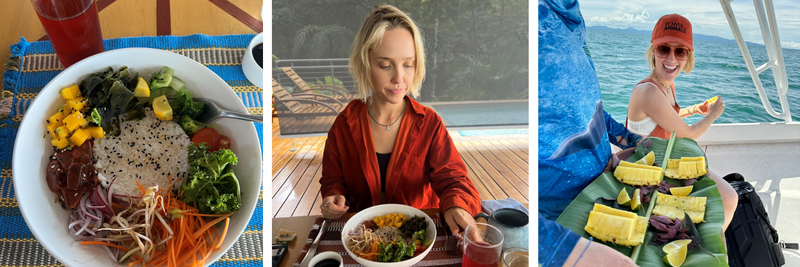
In Costa Rica, I loved trying traditional dishes made with fresh, local ingredients, and some of the best meals I had were entirely plant-based. It’s a simple way to lower your environmental impact while discovering new flavours and food traditions at the same time.
One of my favourite meals was Casado – a traditional Costa Rican meal of rice, beans, plantains and salad.
5. I respect wildlife and local cultures
This one sounds obvious, but it’s so important. Watching whales and dolphins in Golfo Dulce from a respectful distance was a powerful reminder: we’re visitors in their world.
I always:
- Keep my distance from wild animals
- Never feed or disturb them
- Follow local guidelines and respect cultural traditions
Ethical travel isn’t just about what we avoid – it’s about how we show up with care, humility and respect.
Why Wildlife Heritage Areas give me hope
Golfo Dulce showed me what’s possible when communities, conservation and responsible tourism come together.
Wildlife Heritage Areas protect entire ecosystems and keep animals wild, where they belong. They’re a hopeful model for the future of travel and conservation.
We all have the power to make travel kinder – through the places we visit, the experiences we choose and the values we support.
If we do it right, our adventures don’t just create memories. They help protect the world we’re so lucky to explore.
Whale Heritage Areas
Whale Heritage Areas are a global accreditation scheme that recognizes venues that offer and promote responsible and sustainable wild whale and dolphin watching.

Wildlife Heritage Areas
Wildlife Heritage Areas are places where a deep and respectful connection exists between a guardian community and a wild species, species group, or habitat.