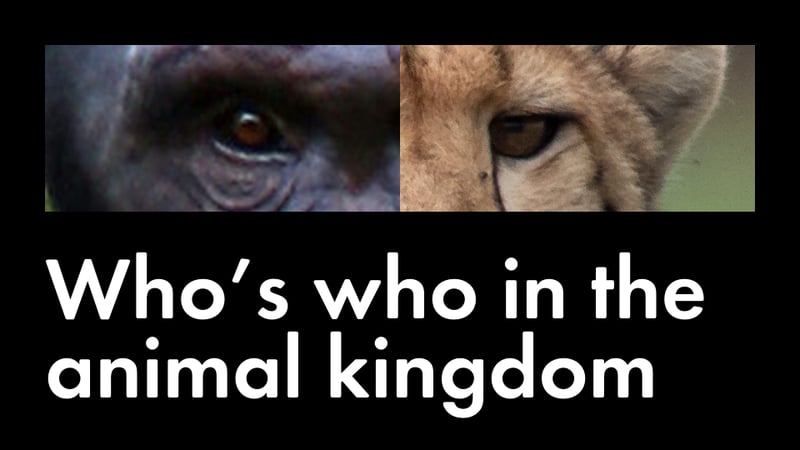
Nature's case of mistaken identities
Blog
Explore nature's fascinating cases of mistaken identities as we unravel the distinctive characteristics that differentiate commonly confused animal pairs, from frogs and toads to gorillas and chimpanzees.
Have you ever mistaken a turtle for a tortoise, or found yourself wondering what the difference was between a cheetah and a leopard? Nature is full of fascinating creatures, some of which bear striking resemblances to one another, leading to common cases of mistaken identities.
In honour of World Wildlife Day on March 3, we’re celebrating the incredible diversity of animals by exploring some of nature’s most commonly confused species. In this exploration, we embark on a journey through the animal kingdom, uncovering the subtle yet significant differences between commonly confused pairs...
Let’s unmask the animal impostors!
Here are 7 cases of mistaken identity in the animal kingdom:
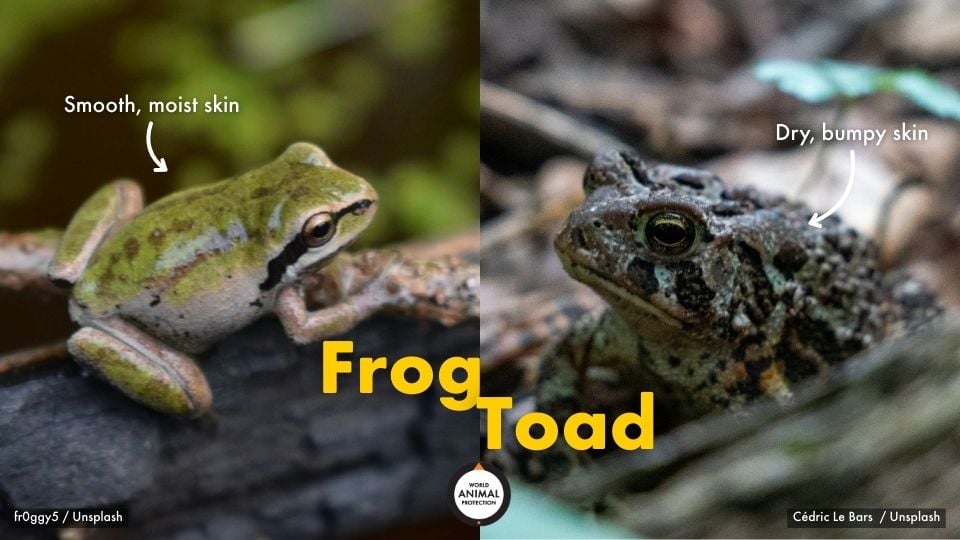
1. Frog or toad? 🐸
- Skin texture: Frogs typically have smooth and moist skin, while toads have rough and dry skin.
- Habitat: Frogs are often found near water sources, while toads are more terrestrial and can be found in drier environments.
- Appearance: Frogs have longer legs and are usually slenderer, whereas toads have shorter legs and a stockier build.
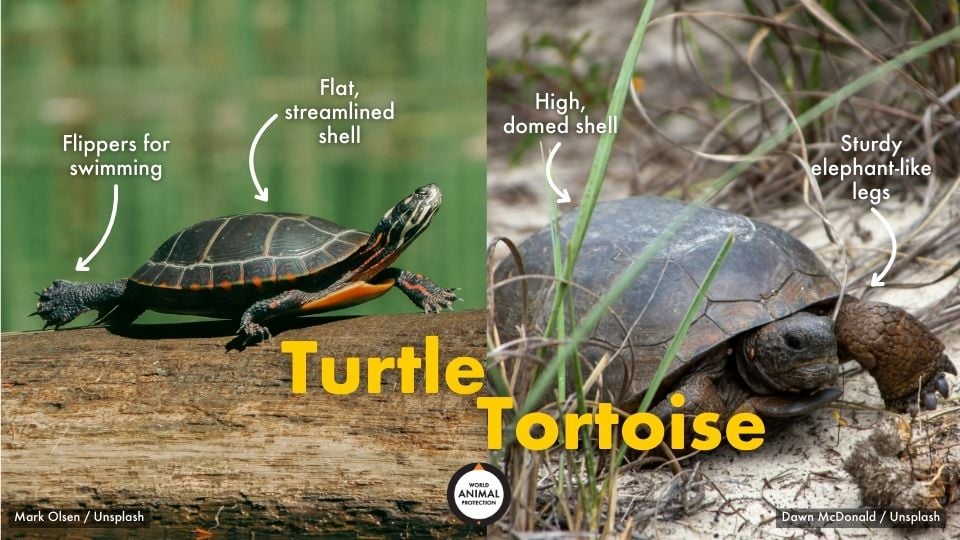
2. Turtle or tortoise? 🐢
- Habitat: Turtles are primarily aquatic and spend a significant amount of time in the water, while tortoises are land-dwelling and do not swim.
- Limbs: Turtles typically have webbed feet or flippers for swimming, whereas tortoises have sturdy, column-like legs.
- Diet: Turtles are omnivorous – eating a mixture of plants and meat, while tortoises are strict vegetarians.
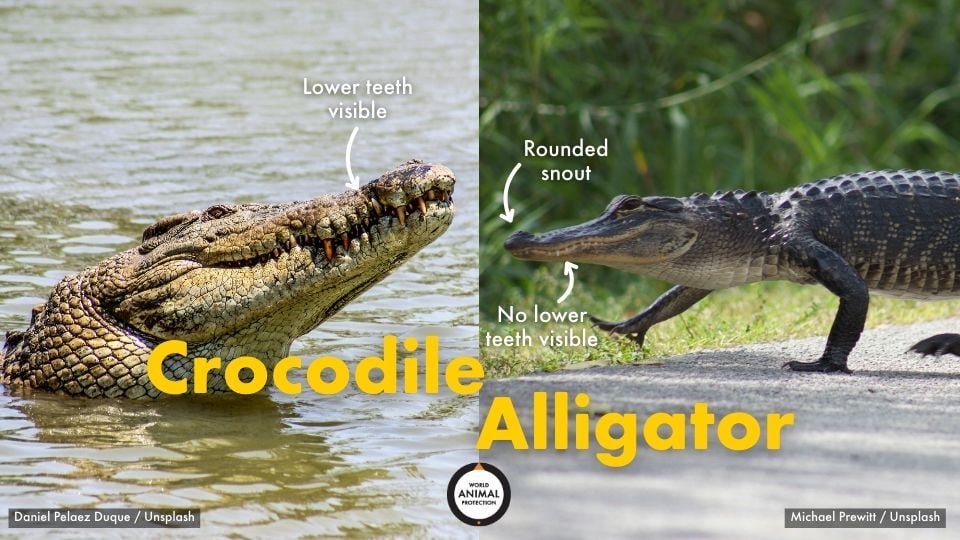
3. Crocodile or alligator? 🐊
- Location: Crocodiles are found in various parts of the world, including Africa, Asia, the Americas, and Australia, while alligators are primarily found in the southeastern United States and China.
- Snout shape: Crocodiles have a V-shaped, pointed snout, while alligators have a U-shaped, broader snout.
- Habitat: Crocodiles are more territorial and can tolerate saltwater, whereas alligators prefer freshwater environments and are generally less aggressive.
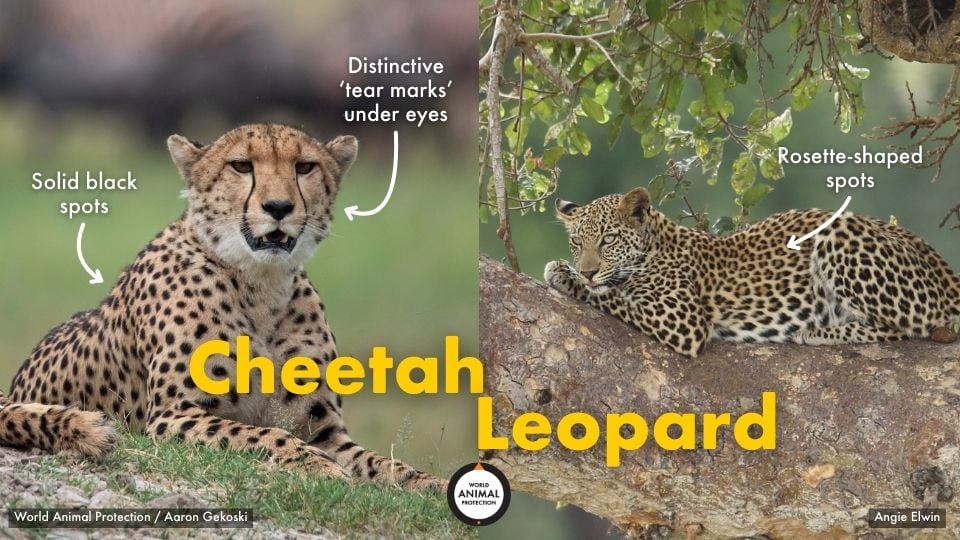
4. Cheetah or leopard? 🐆
- Coat spots: Cheetahs have solid black spots on a tan background, while leopards have rosette-shaped spots on a golden-yellow coat.
- Size and build: Cheetahs are slimmer and built for speed, while leopards are stockier and more powerful.
- Habitat: Cheetahs are mainly found in open grasslands, while leopards are more adaptable and can be found in a variety of habitats, including forests.
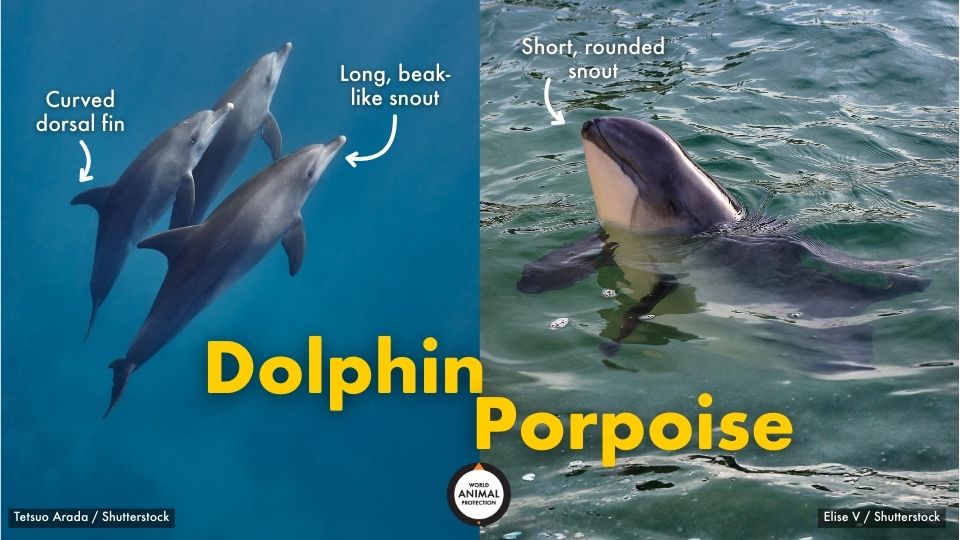
5. Dolphin or porpoise? 🐬
- Nose shape: Dolphins have elongated, beak-like noses, while porpoises have shorter, more rounded noses.
- Fin shape: Dolphins typically have a curved dorsal fin, whereas porpoises have a triangular or more pointed dorsal fin.
- Behaviour: Dolphins are generally more playful and acrobatic than porpoises.
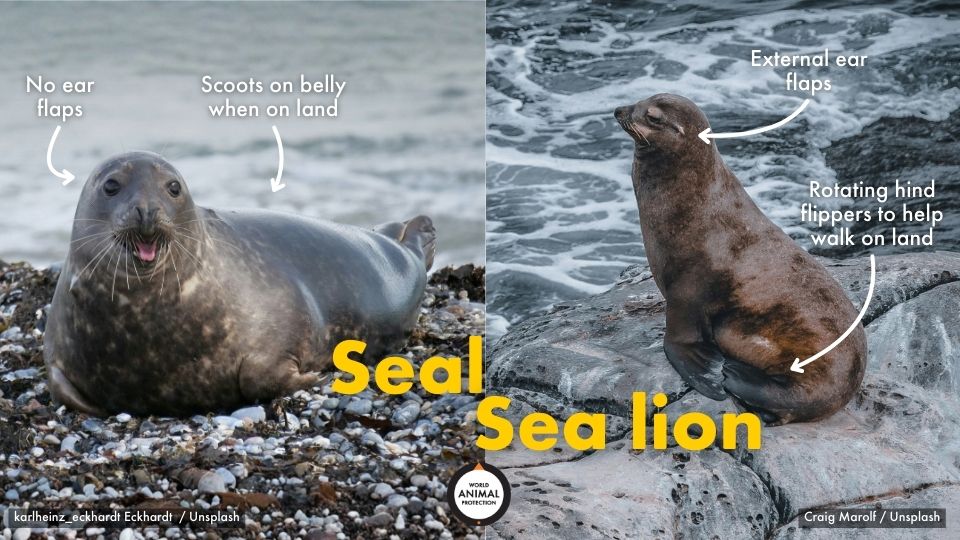
6. Seal or sea lion? 🦭
- Ears: Sea lions have external ear flaps, while seals generally lack visible external ears.
- Locomotion: Sea lions have rotating hind flippers, enabling them to walk on land, while seals move on land by flopping along.
- Behaviour: Sea lions are more social and vocal compared to seals.
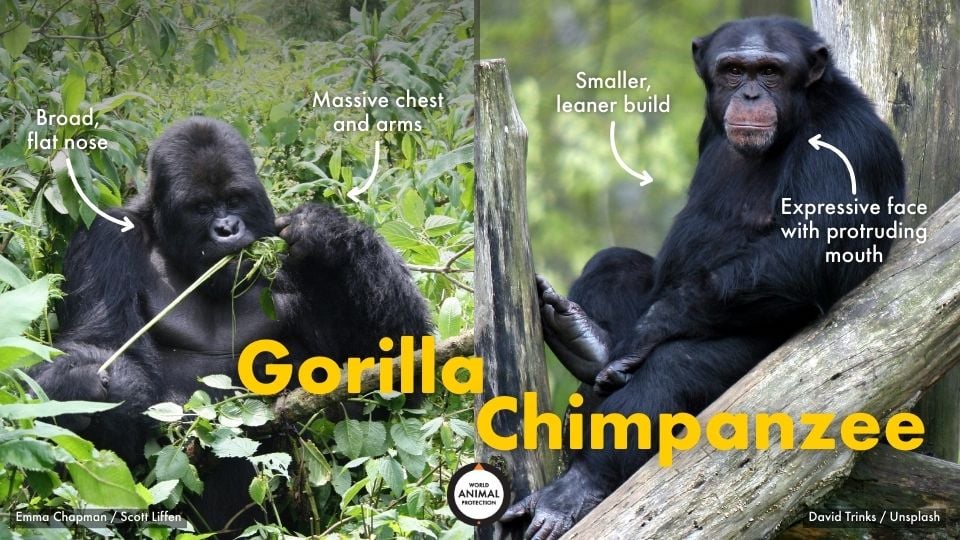
7. Gorilla or chimpanzee? 🦍
- Size: Gorillas are larger and heavier than chimpanzees.
- Behaviour: Gorillas are typically more solitary and peaceful, while chimpanzees are known for their social and often more territorial behaviour.
- Habitat: Gorillas are usually found in forested habitats, while chimpanzees can inhabit a wider range of environments.
And a bonus (because we couldn’t resist):
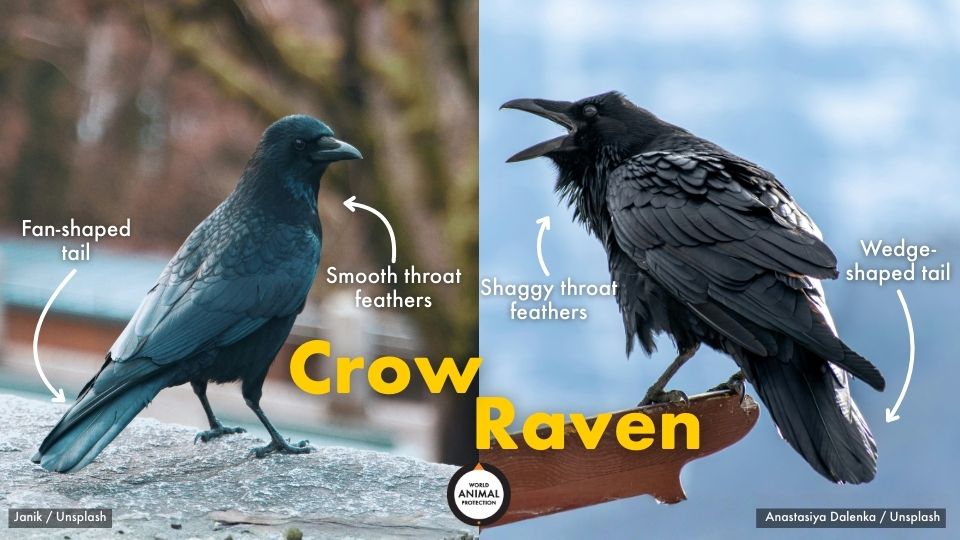
8. Crow or raven? 🐦⬛
- Size: Ravens are much larger than crows.
- Tail shape: Ravens have wedge-shaped tails, while crows have fan-shaped tails.
- Vocalizations: Ravens produce deeper, croak-like calls, while crows have a wider range of vocalizations.
And the list could go on and on...
Understanding the nuances between similar-looking animals enriches our appreciation for the diversity of life on Earth. By recognizing these differences, we can cultivate a deeper empathy for the natural world and strive to protect and preserve its inhabitants.
This World Wildlife Day, we celebrate the diversity of wildlife – and the remarkable differences that make every species unique.
Together, let's embrace our role as caretakers of this planet and work towards a future where all species can thrive.
Learn more about animals and how to protect them
Our educational resources, activities and other materials will develop an understanding of the importance of animals.