Mexico’s next chapter for dolphins
Blog
Mexico’s dolphin show ban marks an important milestone – now, it's time to enforce it.
In a landmark decision for animal welfare, Mexico took a decisive step to end the exploitation of dolphins for entertainment. In June 2025, the country approved a nationwide ban on dolphin shows and the use of marine mammals in entertainment, marking a historic shift in how these intelligent animals are treated.
This moment did not happen overnight. It reflects years of growing public concern, scientific evidence and advocacy exposing the harsh realities of captivity. Dolphins, highly social animals, have long been confined to tanks and forced to perform unnatural behaviours for tourist entertainment. Now, Mexico is charting a different path.
From policy to practice: ensuring real change for dolphins
While the ban sets a clear legal framework, implementation is already revealing the complexity of transitioning away from dolphin entertainment. Facilities are starting to be assessed to ensure the well-being of animals still in captivity.
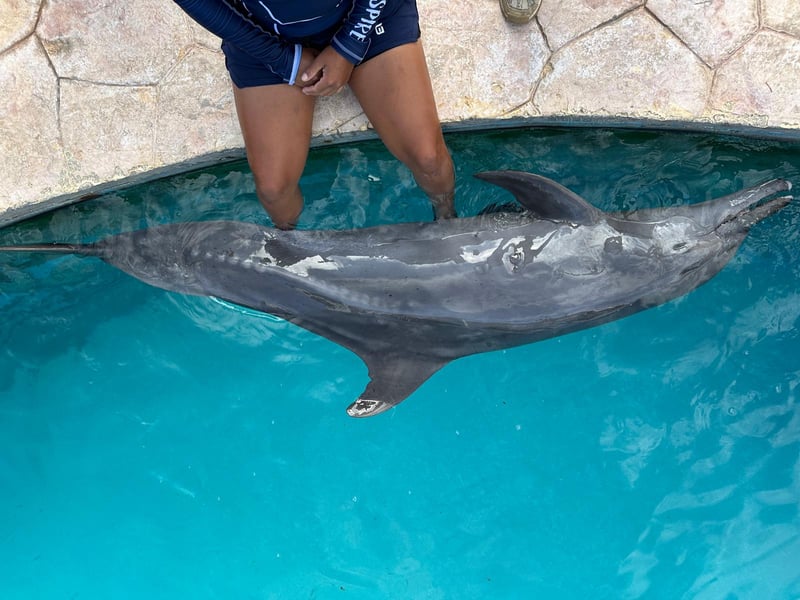
World Animal Protection is currently supporting Mexico’s environmental enforcement authority, Procuraduría Federal de Protección al Ambiente (PROFEPA), in assessing a Dolphin Discovery facility in Cancun. As part of an administrative procedure, we are providing technical expertise on the health and welfare conditions of nine dolphins, contributing scientific evidence to determine whether there have been violations of Mexico’s wildlife environmental law.
We welcome PROFEPA’s intervention. Their actions signal an important commitment to not only uphold the law but to prioritize animal welfare in practice. Investigations and inspections like this are essential to ensure that the spirit of the ban translates into meaningful change for dolphins.
A responsible transition: putting welfare first
Ending dolphin shows is not as simple as closing facilities overnight. Hundreds of dolphins remain in captivity and their futures must be handled with care, expertise and long-term planning.
That is why World Animal Protection is working alongside PROFEPA to support the development of a responsible transition plan. This includes exploring options for relocation — but only when it is safe, feasible and in the best interest of each individual animal.
Sanctuaries and seaside refuges offer a promising alternative, allowing dolphins to live in more natural conditions without being forced to perform. However, it needs to be a conscious and thoughtful process where animal welfare is a priority.
Mexico’s ban represents a global milestone. It sends a clear message: wild animals do not belong in entertainment.
This is a moment of transition that requires collaboration. Governments, NGOs, scientists and the tourism industry all have a role to play in ensuring that dolphins are no longer exploited, but protected.