Easy spring break activities that help kids connect with nature
Blog
Spring break is the perfect time to help kids explore the natural world. These simple outdoor activities encourage curiosity, observation and compassion for wildlife – whether you visit a park or simply step into your own backyard.
Looking for meaningful spring break activities for kids that don’t involve screens? Spending time outdoors helps children build curiosity, creativity and empathy for animals and the environment.
These five easy nature activities require minimal supplies and work anywhere – from neighbourhood parks to backyards. Each activity includes a printable resource to help kids observe wildlife, plants and seasonal changes.
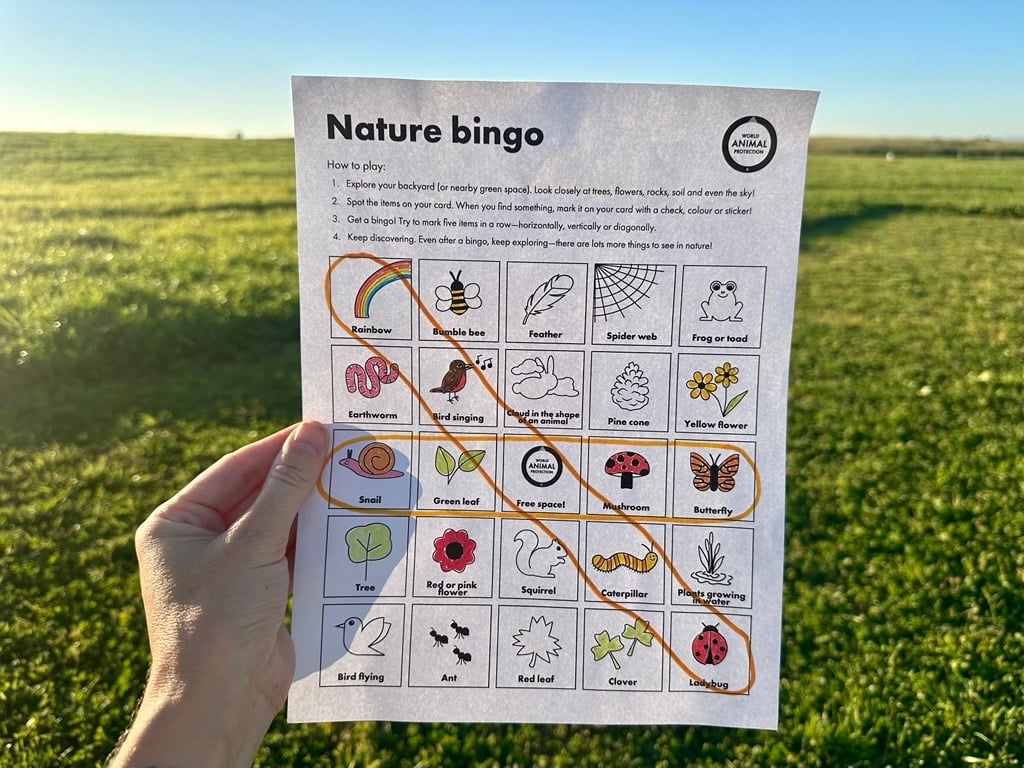
1. Nature bingo: best for playful explorers
Turn a simple walk into a wildlife discovery game.
Kids search for signs of nature in a park, green space or backyard. This activity builds observation skills and helps children recognize biodiversity in everyday environments.
You will look for things like:
- Bird nest or feather
- Insect (bee, ladybug, ant)
- Budding tree or flower
- Moss or lichen
- Signs of animal tracks in mud/snow
Download: Printable nature bingo card (PDF) - full colour
Download: Printable nature bingo card (PDF) - black and white – save printer ink and colour it in yourself!
Why this works: Gamified exploration increases engagement and helps children notice small details in ecosystems.
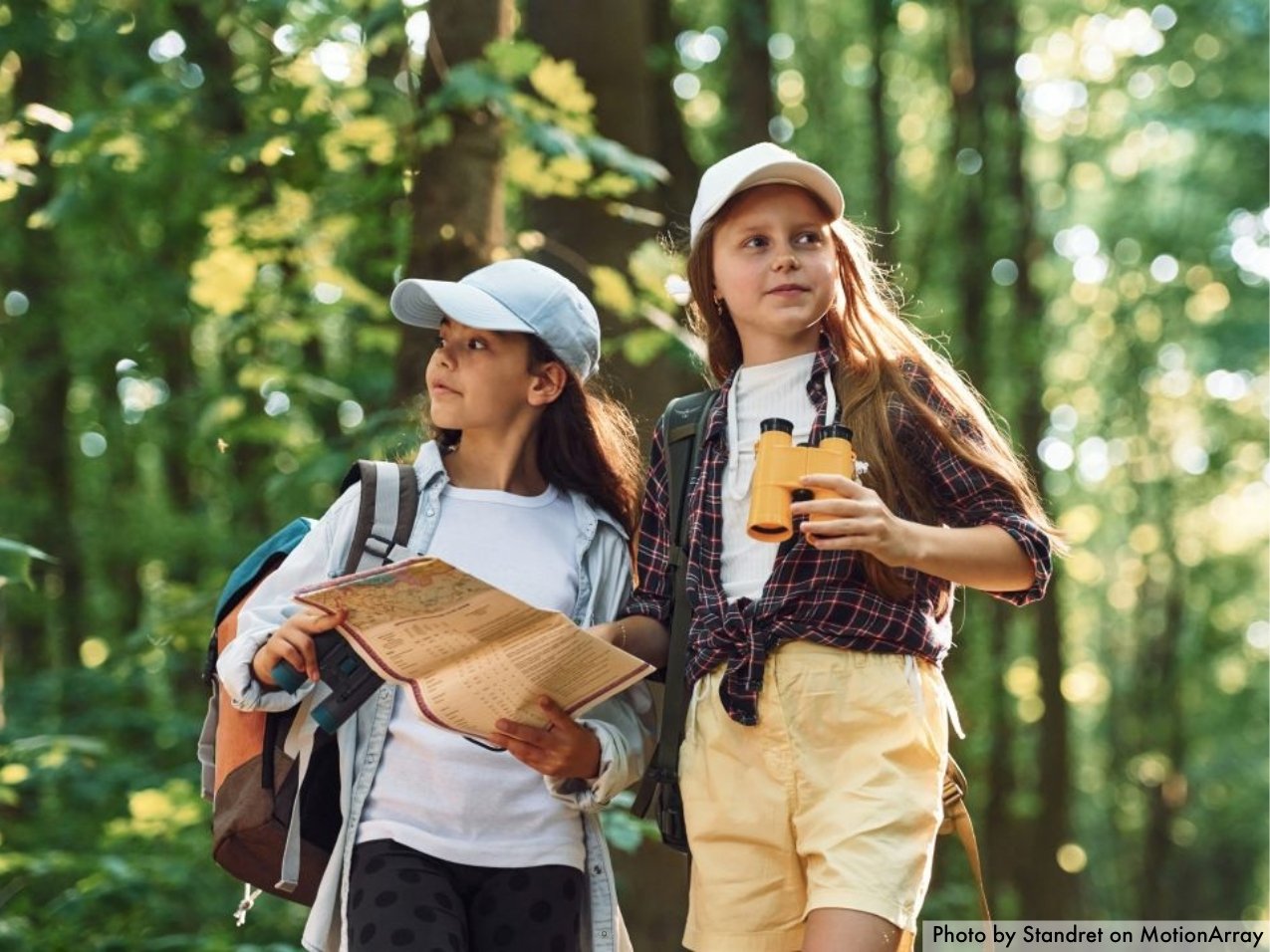
2. Wildlife observation log: best for curious observers
Encourage kids to become backyard scientists!
Children will record their wildlife sightings and seasonal changes. Over time, they may learn patterns in animal behaviour and weather.
The observation log includes things like recording:
- Date, location and weather conditions
- Animals or plants spotted
- Description or drawing
Download: Printable observation log (PDF)
Learning outcome: Builds scientific thinking and awareness of local ecosystems.
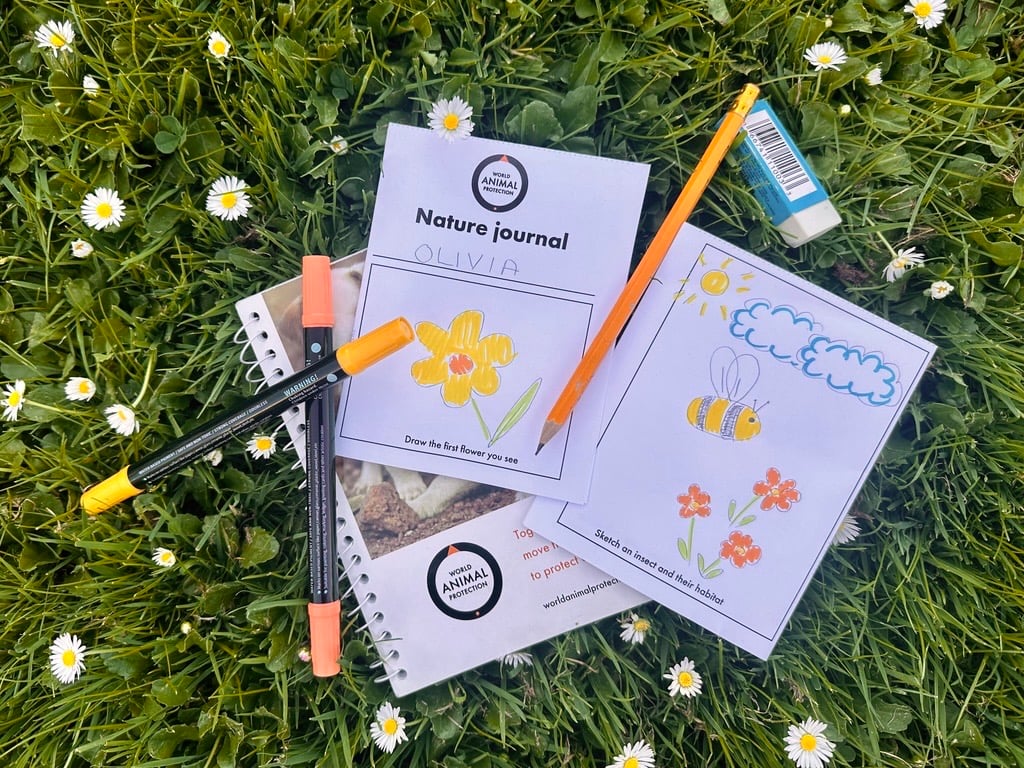
3. Mini nature journal: best for creative learners
Combine art and observation to deepen their connection with nature.
Kids will sketch plants, insects or animals using simple prompts that guide attention to detail.
Journal prompts:
- Draw the first flower you see
- Sketch an insect and their habitat
- Describe a bird’s behaviour
- Observe how a tree changes during spring
Download: Printable nature journal pages (PDF)
Why it matters: Drawing and journaling strengthens memory and encourages mindful outdoor experiences.
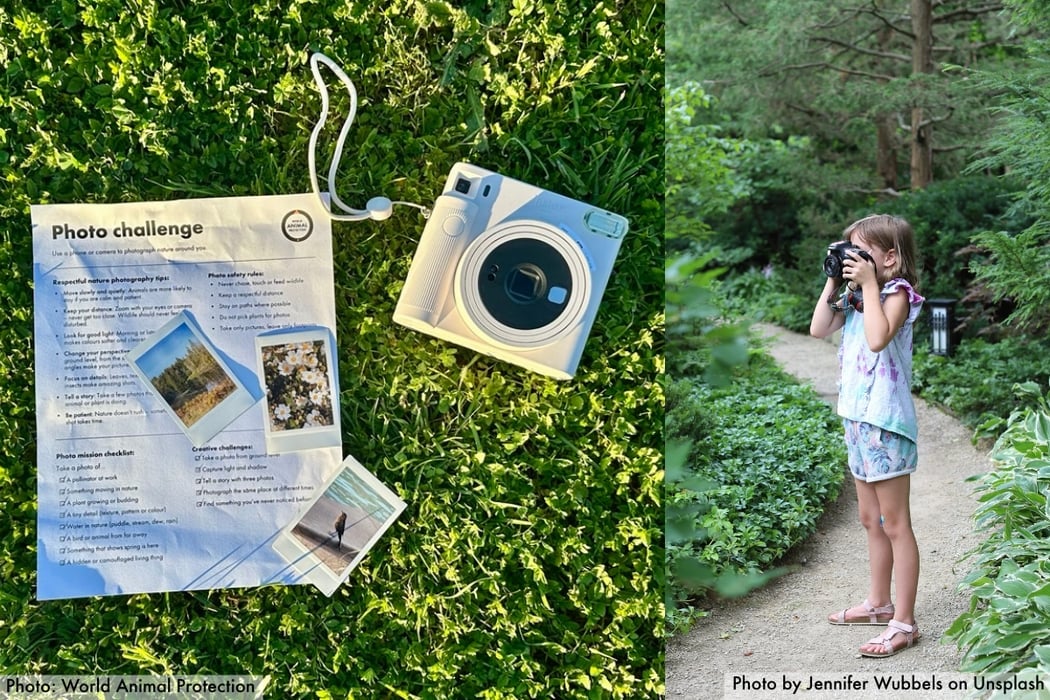
4. Backyard wildlife photography challenge: best for tech-loving kids
Turn a phone or camera into a conservation tool.
Children will document nature through photography, learning patience and respect for wildlife.
Photo challenge ideas:
- Photograph a pollinator
- Capture something moving
- Find a hidden insect
- Document water in nature
Download: Printable photo challenge tips sheet (PDF)
Remember: The best photos tell a story. Take your time, notice small details and enjoy discovering the beauty of nature around you.
5. Make a nature collage: best for hands-on creators
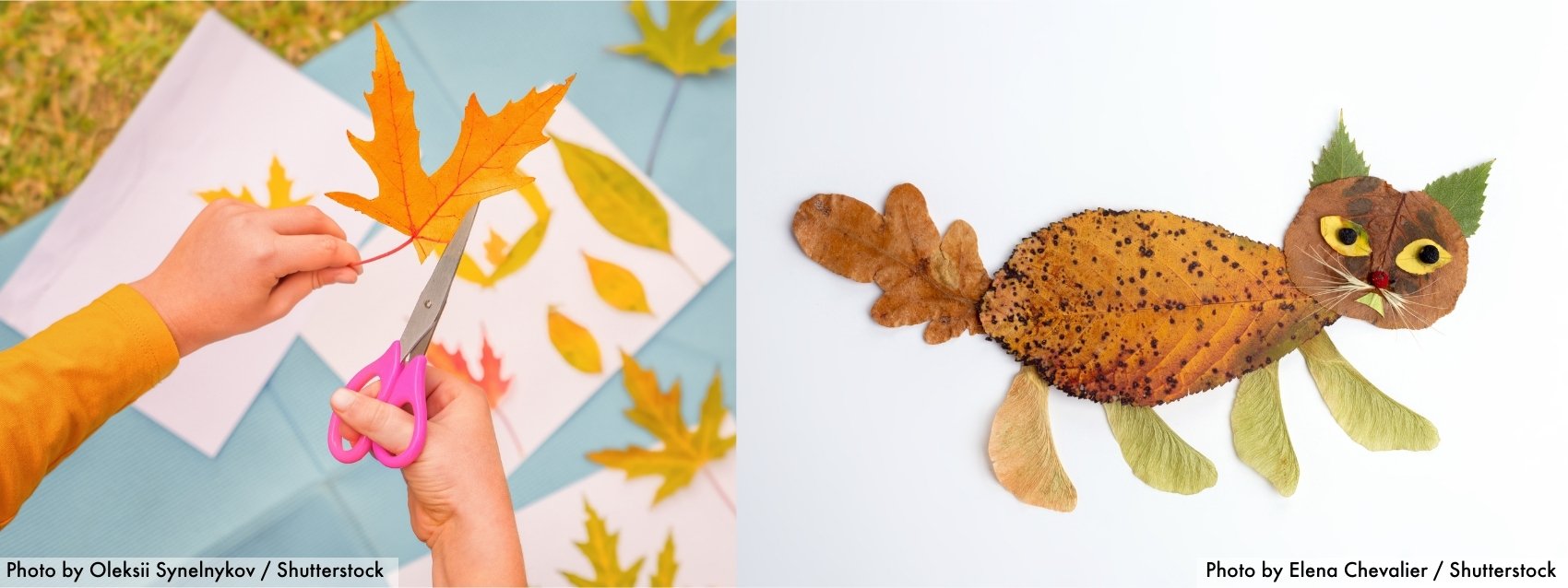
Transform natural materials into art inspired by wildlife.
Children will collect fallen leaves, twigs and petals to create animals, landscapes or patterns. Arrange the materials on a piece of paper with some glue. This activity encourages creativity while reinforcing respect for natural spaces.
Download: Printable nature collage worksheet (PDF)
Tip: Only collect items already on the ground and leave living plants undisturbed.
Banner photo by Melissa Askew / Unsplash