Canada’s Code of Practice for the Care and Handling of Beef Cattle is up for review and public comment
Blog
Nearly 12 million cows are raised for beef in Canada.
While most begin life outdoors on pasture - a more natural environment than that experienced by most other farmed animals - they are still subjected to significant harms throughout their lives:
- Painful procedures such as hot iron branding, dehorning and castration.
- Abrupt weaning from their mothers to be shipped to sales auction yards and feedlots causing fear and stress.
- Fed an unnatural diet high in grains at feedlots to fatten them for slaughter, which can cause intestinal bloat, liver abscesses and lameness.
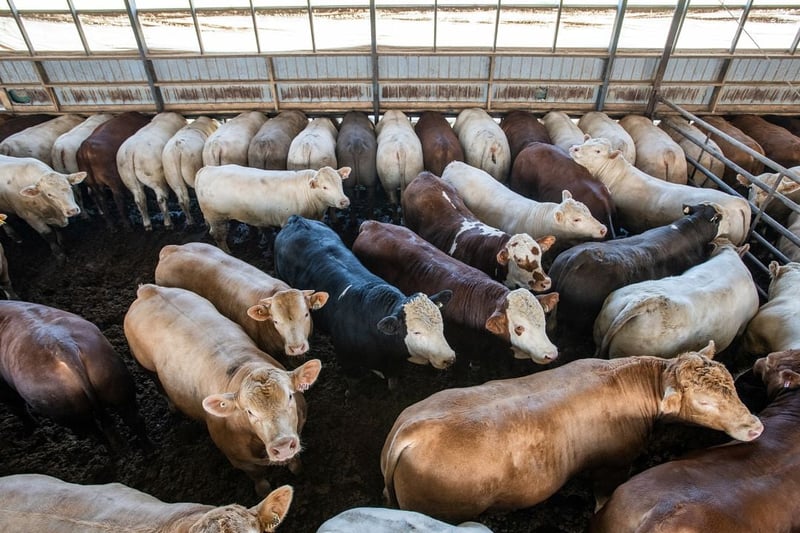
- Exposure to increasingly extreme weather elements, particularly at feedlots where there is no required overhead shelter.
The National Farm Animal Care Council (NFACC) Code of Practice for the Care and Handling of Beef Cattle sets industry standards for raising beef cows in Canada. While NFACC’s Codes of Practice are mostly voluntary, they are the only guidelines for farmed animal care in Canada.
Earlier this month, NFACC released an updated draft of the Code, which is currently open for public comments. The draft Code includes some modest improvements – most notably pain control for procedures such as hot iron/freeze branding, dehorning/disbudding, spaying and castration. However, it has not adequately addressed other serious welfare concerns, and we are disappointed by the slow progress happening in the sector.
This is your opportunity to speak up for farmed animals and push for stronger protections!
Public comments can be submitted via an online survey from April 13 - June 13, 2026.
It is organized by sections of the Code and takes approximately 20-30 minutes to complete. While the survey is long and covers all aspects of beef cattle farming, you may skip questions and jump to the next section.
Below are the key issues (by section) we’ve identified for further changes. The following is to provide you with some guidance, but please try to use your own words in your submission.
Section 1 - Animal environment
1.1 Protection from extreme weather
Our concern: While the code requires shelter from high wind during cold weather, the wording concerning heat and humidity is reactive rather than proactive, requiring personnel to monitor and assist animals once their welfare is already compromised, rather than preventing heat and cold stress in the first place. There is no specific requirement for overhead protection during extreme heat at barren feedlots, where animals may remain for up to 200 days.
Ask the Code Committee to require: adequate overhead shelter in all facilities (ranches, auction yards and especially feedlots) to protect cattle from harsh weather elements, particularly high temperatures, to prevent heat stress in animals.
1.2 Facilities for all cattle
1.2.1 - Auction sales yards (propose new sub-section 1.2.1)
Our concern: The 2013 Beef Code and the Draft Update do not have a section specific to auction yards. There are roughly 100 auction markets across the country. We would like auction yards specifically included in Section 1.1. to ensure animals are covered by many of the animal environment requirements and recommendations listed in this section.
Section 3 – Animal health
3.3 Health conditions of beef cattle
Our concern: At about six months of age, calves are sent to auction and then feedlots for fattening before being sent to slaughter. The mixing of newly weaned animals at auction sites and upon arrival at feedlots poses a significant risk for the spread of disease and is the biggest risk factor for Bovine Respiratory Diseases (BRD). The code acknowledges this fact but does not include any requirements to reduce the risk.
Two-step gradual weaning and “pre-conditioning” of animals on the farm/ranch prior to arrival at the feedlot would significantly reduce stress and help support their immune systems and thus reduce disease and reliance on antibiotics at the feedlot.
Preconditioning means calves receive vaccinations and parasite treatments, have gradually transitioned to a diet higher in grain, and painful/stressful management practices such as dehorning and castration have occurred in the weeks/months before being transported to the feedlot.
Ask the Code Committee to require: All calves must be preconditioned on the ranch/farm prior to transport to auction or the feedlot by January 1, 2030
Section 4 – Animal husbandry
4.3 Identification (branding)
Our concern: Some producers still use hot irons or freezing with liquid nitrogen to burn their family crest or brand on the bodies of young cattle. The current beef code and new draft code recognize that branding causes significant short- and long-term pain which cannot be easily mitigated with pain control. Unfortunately, this practice is not being phased out.
Pain management will now be required for calves under 6 months old but pain control for cattle older than 6 months is not required until January 1, 2032. Such a delay cannot be justified, especially since the industry claims fewer than 10% of Canadian cattle are branded.
Furthermore, the skin of calves under the age of 2 months old is thin and there is a risk that branding can burn through their skin and damage the underlying muscle tissue. For that reason, at a minimum, branding should be prohibited on animals less than two months old.
Ask the Code Committee to require:
- Elimination of all hot iron and freeze branding by January 1, 2032.
- Pain control when branding cattle of any age, effective immediately (until branding is eliminated).
- Branding be immediately eliminated for calves under two-months of age
4.5 Castration
Our concern: We are pleased the code is requiring pain control for castrating calves/bulls of all ages and that it must be performed on cattle as young as possible by competent personnel. However, we would like age limits set so no cattle over three months of age are castrated. As well, it must be performed before the animals enter the feedlot given the other stressful events and diseases they experience upon arrival.
Ask the Code Committee to require: All castration must occur between 1-week to 3-months old, with pain control, but not during weaning.
4.6 Weaning management
Our concern: One of the most stressful times for beef cows occurs at weaning. Young calves are abruptly denied milk and separated from their mothers. Research has shown that a more gradual separation from its mother’s milk (through the use of temporary nose paddles) and keeping mother and calf in site/hearing of each other but physically separated by the fence-line, with a slow transition from forage to grain, lowers stress levels, and fosters a healthier immune system and weight gain. This combination of practices is known as two-step weaning and is included as a recommendation in the draft code, but not as a requirement, despite the many years of research (even by the beef industry) supporting the importance of this practice.
Ask the Code Committee to require: Two-step weaning by January 1, 2030 to reduce stress at weaning and thus susceptibility to Bovine Respiratory Disease (BRD)
The draft Code includes more sections than we’ve listed. We encourage you to comment on any sections that matter to you – every voice helps push for better protections. You don’t need to complete every section to make an impact; you can skip ahead and still submit your feedback.
This is a rare opportunity to influence how millions of animals are treated in Canada. Without public pressure, meaningful change is unlikely.
Take a few minutes today to speak up for farmed animals:
- Start the NFACC public comment survey via Survey Monkey
- View the full draft Code on the NFACC website
Your voice can help drive stronger standards and better lives for millions of cows.
Banner photo: Young cattle look up towards the camera from inside a crowded indoor feedlot. These animals are confined here until they are sent to slaughter. Quebec, Canada, 2022. (Credit: Jo-Anne McArthur / We Animals)