2025 achievements for animals
Blog
Thanks to the support of animal lovers like you, 2025 brought life-saving rescues, stronger protections and ground-breaking progress for animals worldwide – marking 75 years of our mission in action.
As we celebrate 75 years of moving the world to protect animals, 2025 has been a year of powerful impact and meaningful change. Together, we’ve helped close exploitative facilities, advance laws to protect wild animals, support sanctuaries and rescues, promote humane and sustainable food systems and influence global policy.
Some of our top achievements for animals in 2025:
Supporting rescues and sanctuaries
Shifting tourism away from wildlife entertainment
Engaging government and keeping animal welfare on the political agenda
Stopping the spread of factory farming
Thought leadership and mobilizing experts
Pushing for corporate accountability
Driving responsible investment for animals
Ending roadside zoos and advocating for stronger regulations
Supporting rescues and sanctuaries
This year, thanks to our donors, supporters and partner organizations, we helped give countless animals a second chance at life.
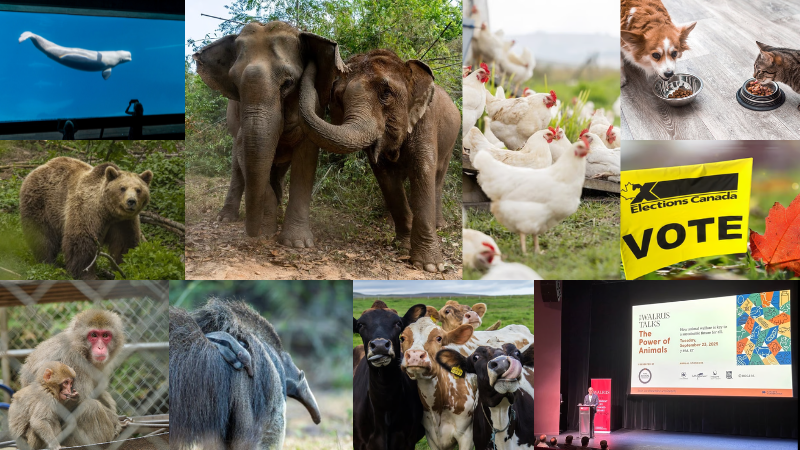
- Rescued 31 long-tailed macaques in 2024 who continue to recover at Jakarta Animal Aid Network (JAAN)'s sanctuary, with some soon to be released into protected wild areas.
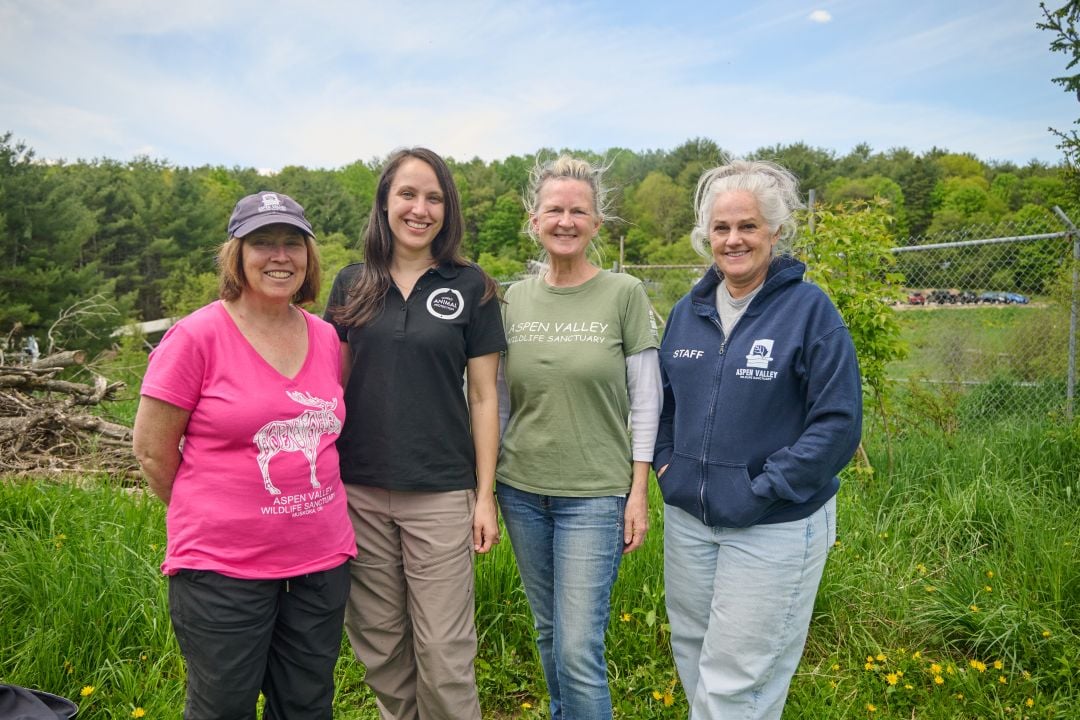
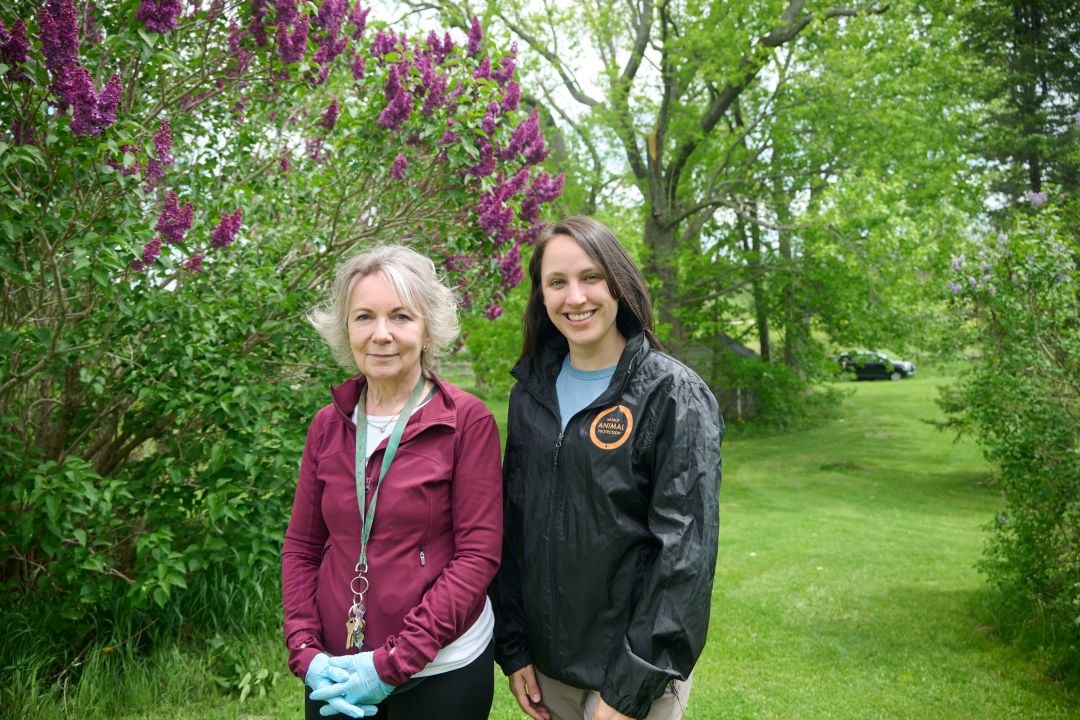
- Supported Aspen Valley Wildlife Sanctuary with a grant to improve their medical facilities, helping them to provide vital care to rescued wildlife.
- Helped Story Book Farm Primate Sanctuary with a grant to expand their enclosure space, giving rescued primates more room to recover.
- Rescued Mannie the lion from a small, indoor enclosure in a Dutch theme park. He is adjusting to his new spacious savannah at The Lions Foundation sanctuary in South Africa and will soon meet his new pride.
- Celebrated the success story of Cecilia the giant anteater, rescued after the 2021 Brazilian wildfires. She was recently spotted with a newborn pup clinging to her back, proving the resilience of wildlife!
- Contributed initial funding to the Whale Sanctuary Project in Nova Scotia and committed to continue supporting this initiative in 2026, helping provide a safe home for whales and dolphins retired from captivity for entertainment.
- Provided emergency support to companion animals and wildlife following the devastating wildfires in Los Angeles, California.
- Delivered vital aid to animals affected by the Saskatchewan wildfires, ensuring their safety and care.
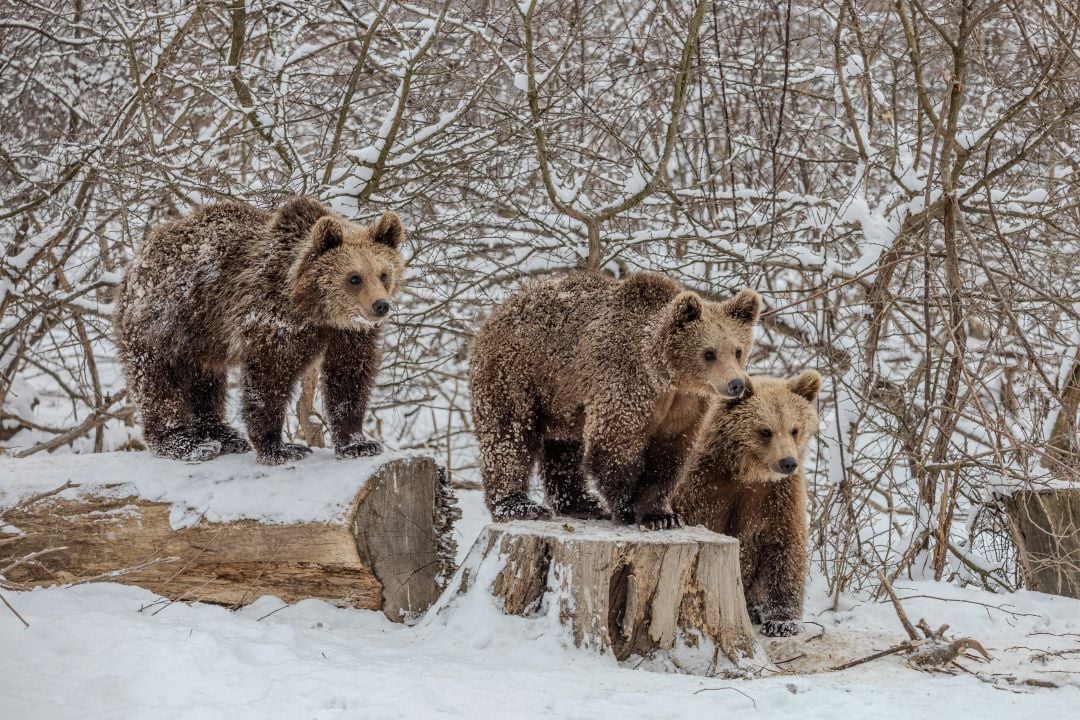
- Supported our partner, Asociatia Milioane de Prieteni (AMP), in building a new enclosure for orphaned bear cubs at the Libearty Sanctuary, giving them the space and enrichment they need to thrive.
Shifting tourism away from wildlife entertainment
This year, we helped drive a global shift toward ethical, wildlife-friendly travel.
- Helped Goway Travel and more than 60 other travel companies in committing to be wildlife-friendly and not selling or promoting wildlife entertainment. This brings our total of wildlife friendly travel companies worldwide to 225 since we started our global campaign.
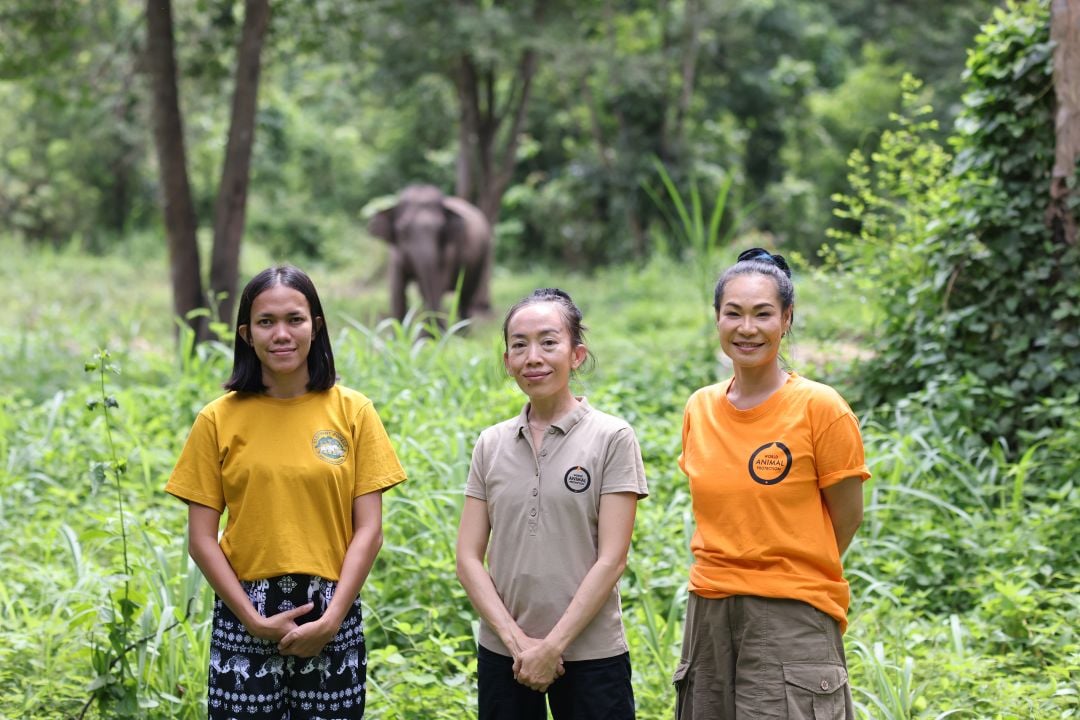
- Supported the opening of Elephant Forest Phitsanoulok in Thailand where elephants roam freely in a guided, observation-only environment, following our elephant-friendly guidelines of no riding, shows or direct contact.
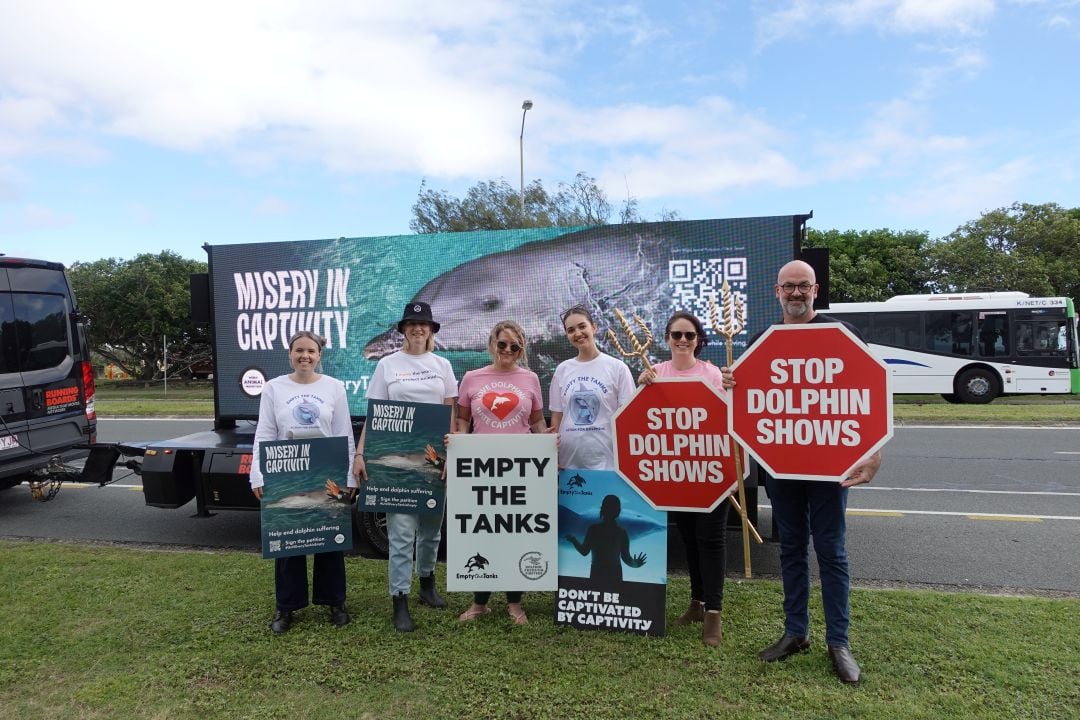
- Contributed to Mexico’s landmark ban on dolphin and marine mammal shows, offering expert guidance and resources to carry out a pilot assessment and design the transfer protocols for animals still in captivity.
- Continued to expand our Wildlife Heritage Areas network, promoting destinations that protect wildlife, their habitats and the communities that safeguard them.
Engaging government and keeping animal welfare on the political agenda
In 2025, we worked across all levels of government to advance stronger protections for animals and ensure animal welfare stayed firmly on the political agenda.
- Vote for Animals campaign: Over 3,000 supporters sent letters to their Members of Parliament (MPs), generating 20+ media hits and demonstrating to political parties that animal welfare must be a priority.
- Co-hosted a national all-party virtual animal welfare debate. The debate included representatives from four federal parties, attracted over 1,000 registrants and featured more than 100 supporter-submitted questions.
- Secured animal welfare commitments from four of the five main parties through survey responses, platform pledges and an all-party debate. Notably, all party representatives at our virtual debate took a position on Marineland, making it a national election issue. The Liberal Party also committed to continuing to support strong laws to reduce the commercial trade in wild animals and announced plans to champion nature conservation internationally, including stopping illegal wildlife trade across Canada’s borders.
- Co-hosted a national all-party virtual animal welfare debate. The debate included representatives from four federal parties, attracted over 1,000 registrants and featured more than 100 supporter-submitted questions.

- Engaged numerous MPs, Ministers, Members of Provincial Parliament (MPPs) and local government officials at key political events, including the Federal Liberal Caucus retreat, the Animal Welfare Caucus, Parliamentary Committee submissions, the launch of Ontario’s roadside zoo bill and the GreenPAC Breakfast on the Hill – achieving several positive outcomes for animals.
- Joined Climate Action Network Canada’s delegation at COP30, helping put factory farming on the global climate policy agenda.
- Advocated for federal funding and implementation of the Nature Intelligence System (NIS) - an AI-powered tool that would help Canada’s border agents crack down on the illegal and underregulated wildlife trade.
- Submitted our testimony to the Federal government’s science committee studying the AMR issue, outlining the urgent need to phase out prophylactic antimicrobial use and improve farmed animal welfare across Canada.
- Pushed for stronger governmental support for plant-based, humane and sustainable food systems and saw progress reflected in the November federal budget, which acknowledged the need to expand plant-based exports.
- Connected Canadian leaders with Denmark’s pioneering Plant-based Action Plan to bring proven sustainable food solutions closer to home, including participation from a Quebec MP at Denmark’s sustainable food systems event at COP.
- Called on Canada’s Commissioner of the Environment and Sustainable Development to address Agriculture and Agri-Food Canada’s failure to develop a plan to cut emissions from animal agriculture, and to promote plant-based farming and diets — one of the most cost-effective pathways to reducing Canada’s climate emissions.
Working with local farmers
This year, we began outreach and engagement with the farming community to strengthen our relationships with forward-thinking Canadian farmers committed to improving animal welfare and sustainability.
- Attended key food and agriculture events to share our vision for food systems change, including at the National Farmers’ Union annual convention, the Arrell Food Summit and the Globe Series Food Leadership Summit.
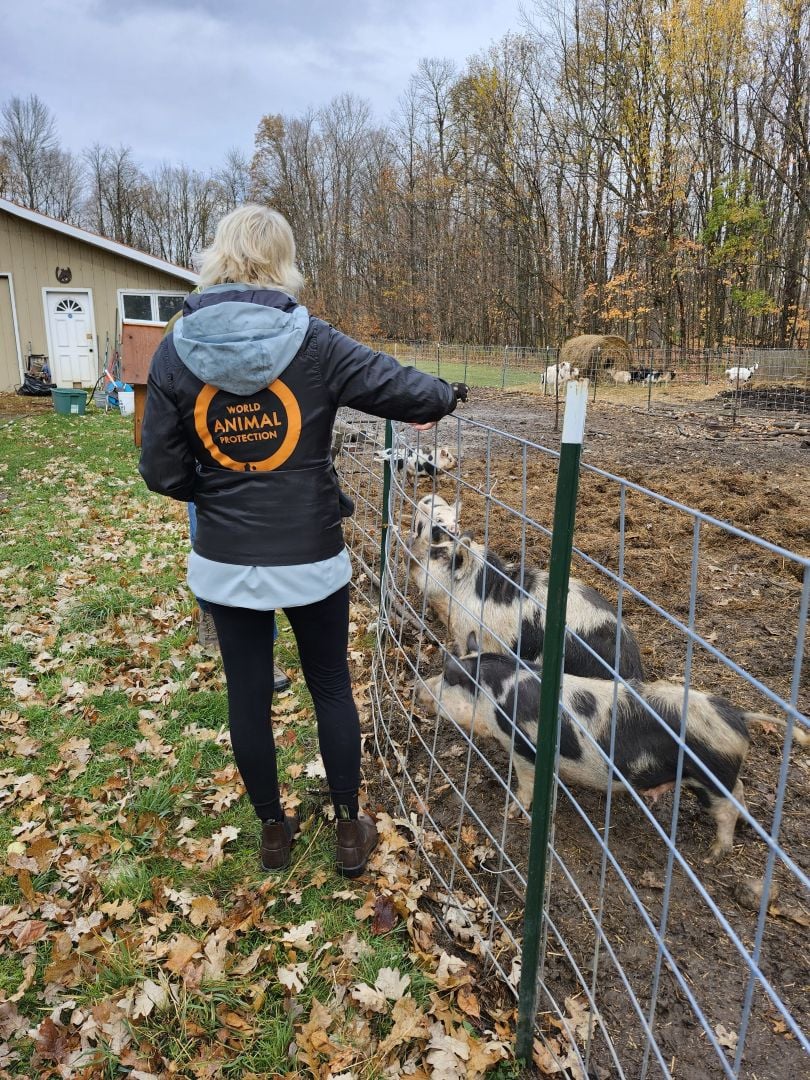
- Visited a high welfare farm to explore new opportunities with innovative farmers raising the bar on welfare standards. Our goal is to develop more case studies in 2026 to highlight progressive farms.

Stopping the spread of factory farming
We continued to hold industrial animal agriculture accountable and push back against its expansion worldwide.
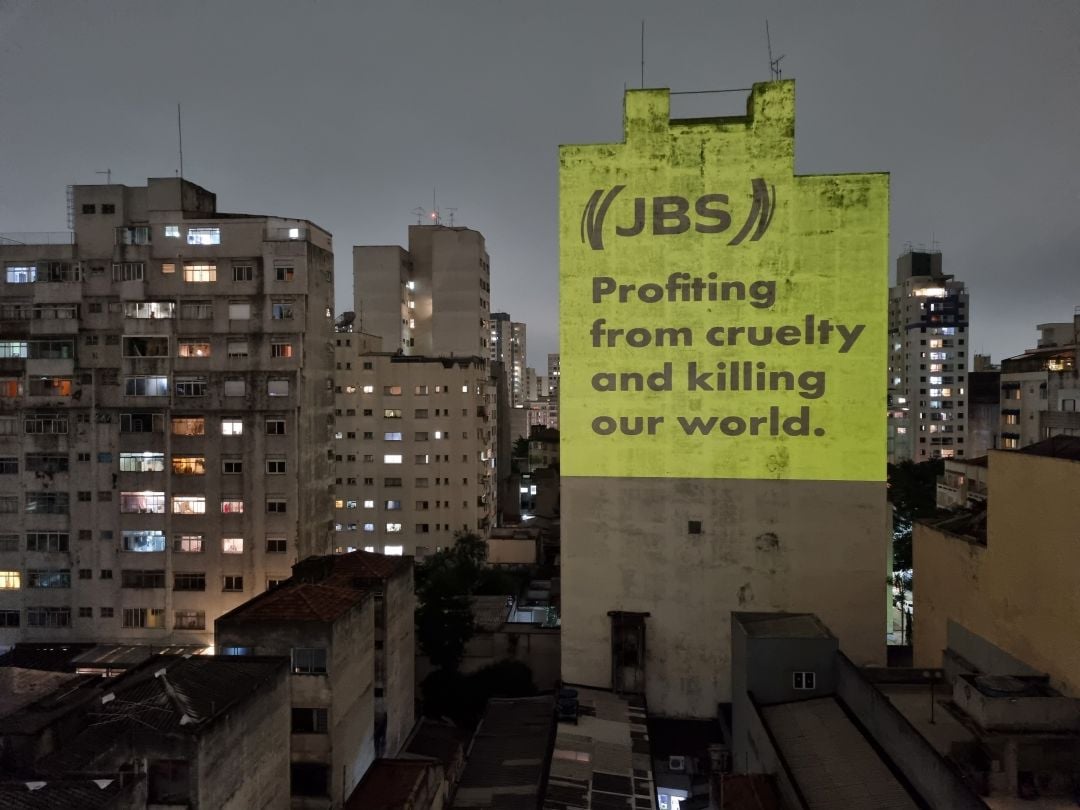
- Exposed JBS corruption, anti-trust activities, tax avoidance and environmental harm, increasing the cost of doing business for industrial animal agriculture.
- Acted against JBS’s proposed expansion into Nigeria, highlighting the risks of factory farming for animals, communities and the environment, while promoting sustainable, humane alternatives.
- Participated in the Drop JBS Coalition, a powerful alliance of campaign groups, lawyers and policy makers, to expose the company’s greenwashing and halt its ambitions for growth.
- Submitted reports to the U.S. Securities and Exchange Commission and credit rating agencies, exposing the truths about how their supply chains drive deforestation and habitat loss.
- Alerted the Science-Based Targets Initiative (SBTi) to the risks of validating JBS’s net-zero claims, which were later removed from their website.
Thought leadership and mobilizing experts
We convened and collaborated with experts to advance knowledge, drive action and promote solutions that benefit animals, people and the planet.
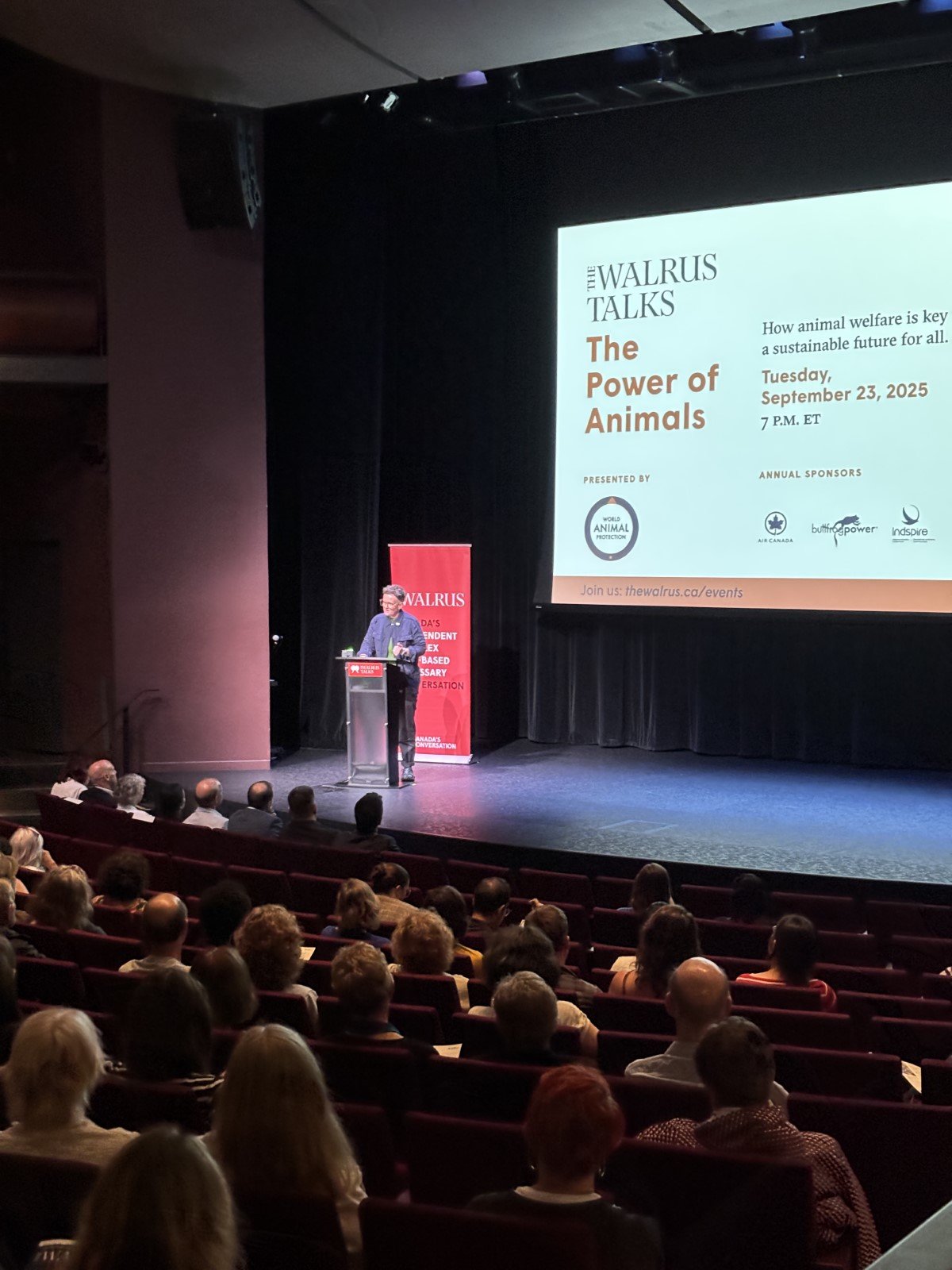
- Sponsored the Walrus Talks: The Power of Animals event, bringing together experts to explore the connections between humans and animals.
- Served as a cornerstone partner for Humane Canada’s One Health One Welfare conference, Canada’s first conference bridging animal, human and environmental health and well-being.
- Launched a scientist sign-on letter urging governmental action to reduce antimicrobial use in farming through higher animal welfare standards, supported by leading Canadian researchers and health professionals.
- Attended the Antimicrobial Resistance Symposium to build further support from the scientist community.
- Participated in “Farm, Fork, Pharma,” an event on antibiotic use in animal agriculture hosted by the Winnipeg Humane Society. The goal was to raise awareness about the health risks associated with the overuse of antibiotics in factory farming.
Pushing for corporate accountability
We worked with companies to create meaningful change, encouraging more ethical and humane practices across the food and retail sectors.
- Engaged Canadian retail chains on improving animal welfare and increasing plant-based food offerings. We presented on priority welfare issues in the National Farm Animal Care Council (NFACC) Codes of Practice being updated to the Retail Council of Canada’s members to help retailers understand how their decisions can drive meaningful improvements to animal care.
- Drove meaningful change in the fast food industry, together with our supporters:
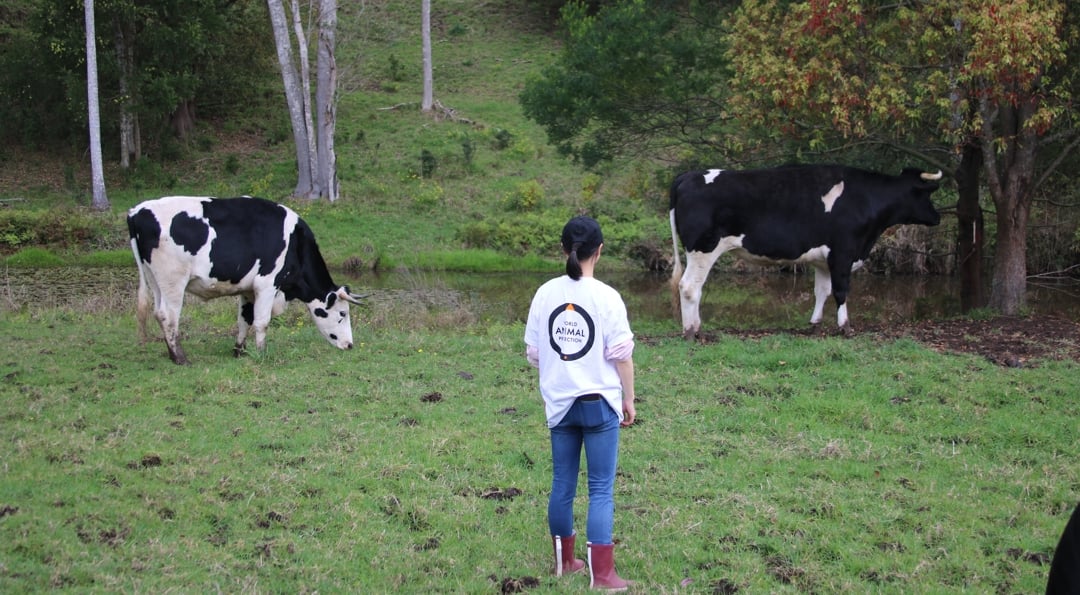
- McDonald’s permanently added the McVeggie burger and a plant-based milk option to their menu after 6,000 supporters took action.
- A&W introduced a new plant-based burger.
- Starbucks, Tim Hortons and Second Cup removed their plant-milk upcharge and continue expanding dairy-free milks and plant-based food menu items.
- Engaged with PetSmart, which adopted a new animal welfare policy and mentioned us in a decision to phase out certain species (Cuban false chameleons, Fancy bearded dragons and several species of snake).
Driving responsible investment for animals
This year, we advanced responsible investment practices by showing how factory farming drives climate emissions and animal suffering, pushing financial institutions to consider both environmental and welfare impacts in their decisions.
- Engaged with financial institutions, including pension funds and major banks, to encourage stronger due diligence and responsible investment practices that reduce exposure to intensive meat and dairy industries.
- Held discussions with a leading Quebec pension fund on including animal welfare factors in its investment decision-making – a first step toward more ethical retirement portfolios.
- Participated in finance sector conferences where no other animal welfare groups attended, including the Sustainable Finance Summit and the Responsible Investment Association Conference, ensuring animals had a voice in these important discussions.
- Joined Women Leading on Climate by invitation from former Minister Catherine McKenna to raise awareness about the link between industrial animal agriculture and climate emissions.
- Supported the Farm Animal Responsible Minimum Standards (FARMS) Initiative and the launch of the Protein Shift Responsible Minimum Standard (RMS), in coalition with Humane World and Compassion in World Farming, promoting higher welfare standards across the global protein supply chain.
- Collaborated with other Canadian NGOs toward building a Fair Finance Coalition to create a stronger collective voice for animals in the financial sector.
Ending roadside zoos and advocating for stronger regulations
Thanks to persistent advocacy and supporter action, 2025 saw major progress in shutting down roadside zoos and pushing for stronger provincial regulations to protect animals.
- Celebrated the permanent closure of Marineland after decades of advocacy, offering hope for stronger zoo regulations in Ontario. World Animal Protection was featured heavily in media in Canada and globally, showing the world is watching what happens next with the fate of the remaining animals at Marineland.
- Saw the results of our advocacy efforts with roadside zoo Waddles’N’Wags permanently closing in 2025 following our exposé report Nothing New at the Zoo, complaints we submitted to PAWS and subsequent animal seizures in 2023 and 2024.
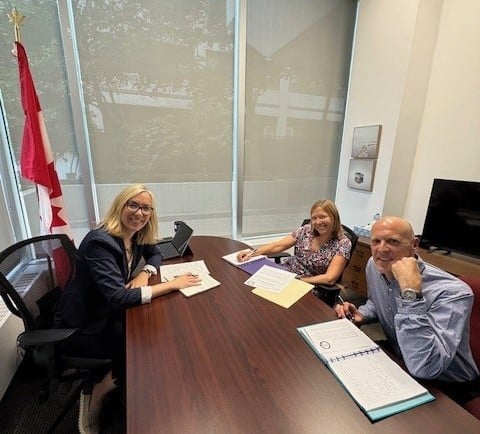
- Met with MPP Silvia Gualtieri (Parliamentary Assistant to the Ontario Solicitor General) to speak about Ontario's roadside zoo problem and the future of the animals at Marineland. We also discussed our research and recommendations for provincial zoo licensing regulations and standards.
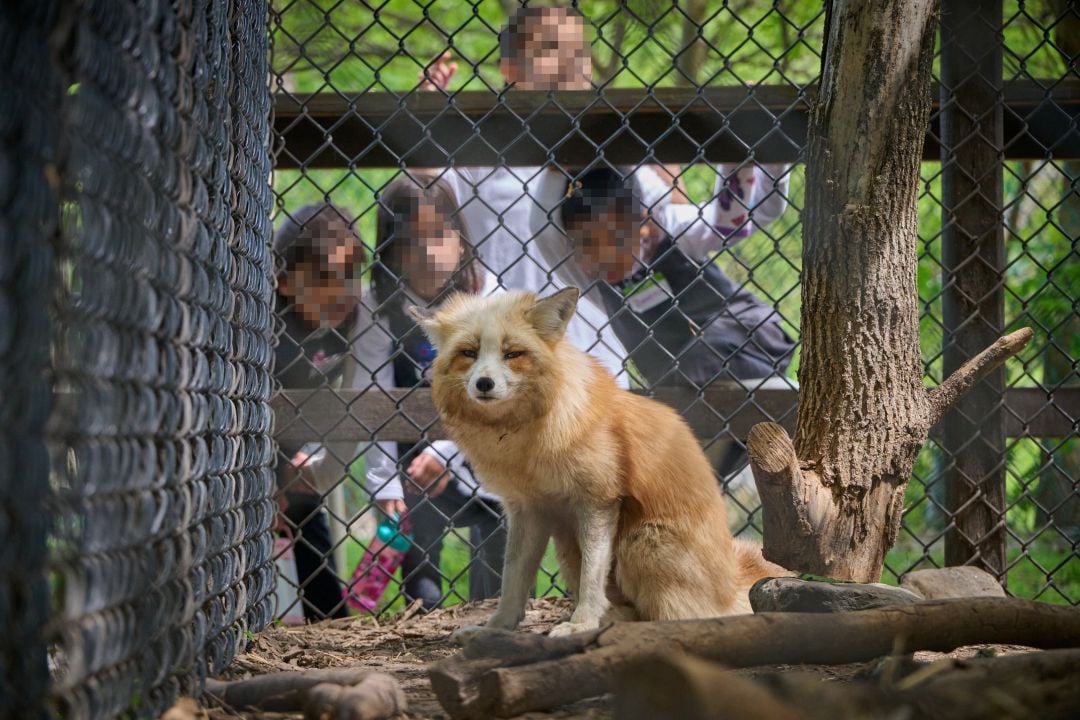
- Visited roadside zoos around Ontario to document the conditions firsthand which could be used to strengthen our discussions with government and policymakers.
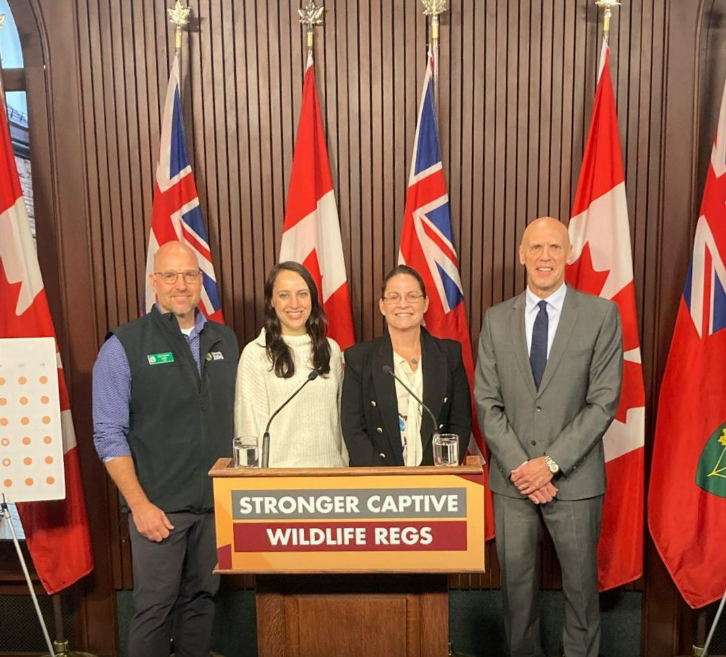
- Supported Ontario Liberal MPPs Lucille Collard and Karen McCrimmon in introducing a new bill in the Legislature to put an end to roadside zoos and wildlife entertainment.
- Gained momentum in our local campaign bringing together municipalities in Ontario calling for stronger province-wide wildlife protections, now reaching over 49 municipalities. We co-hosted a booth with Zoocheck at the 2025 Rural Ontario Municipal Association Conference to promote our municipal resolution to dozens of policymakers and MPs.
- Connected with staff in the Office of the Solicitor General, starting conversations about comprehensive zoo licensing regulations in Ontario.
Developing groundbreaking research
In 2025, we continued to generate evidence-based insights to drive change, from global farming practices to the wildlife trade.
- Commissioned University of Oxford researchers Dr. Joseph Poore and Dr. Katie Javanaud to produce the world’s first Factory Farming Index, quantifying the impacts of factory farming on animal welfare, human health and the environment across 151 countries, including Canada.
- Supported research exposing the illegal and unsustainable legal trade of wildlife in Canada, including the trade of monitor lizards.
- Assisted with the creation of a groundbreaking research and engagement tool: The “Big Meat Exit List” - a comprehensive public database of companies operating in the global meat supply chain.
... and much more!
Thanks for your support in 2025!
None of this progress would be possible without the dedication of animal lovers like you – thank you! As we move into 2026, your continued support is more important than ever. While we’ve achieved so much this past year, there is still a long road ahead in our mission to improve animal welfare worldwide.
Join our community to stay informed and take action to protect animals everywhere.
⭐
Join our community